
Article
Most of Your Ink Never Stays in Your Skin: What's Actually in the Bottle.
A look at what tattoo ink is really made of, where it came from, and why no two "black" bottles are the same.
July 29, 2026
You put it in skin for a living. You've felt how one black packs heavier than another, watched how a color heals three shades softer than it looked wet. But if someone asked you what's actually in the bottle, most Artists land somewhere around "pigment and... some stuff." Here's the stuff.

Ink is two things: pigment and a carrier
Strip it all the way down and ink is tiny pigment particles suspended in a liquid that keeps them evenly mixed. That's it. The pigment is the color. The liquid, the carrier, is just there to hold those particles apart and move them into the skin.
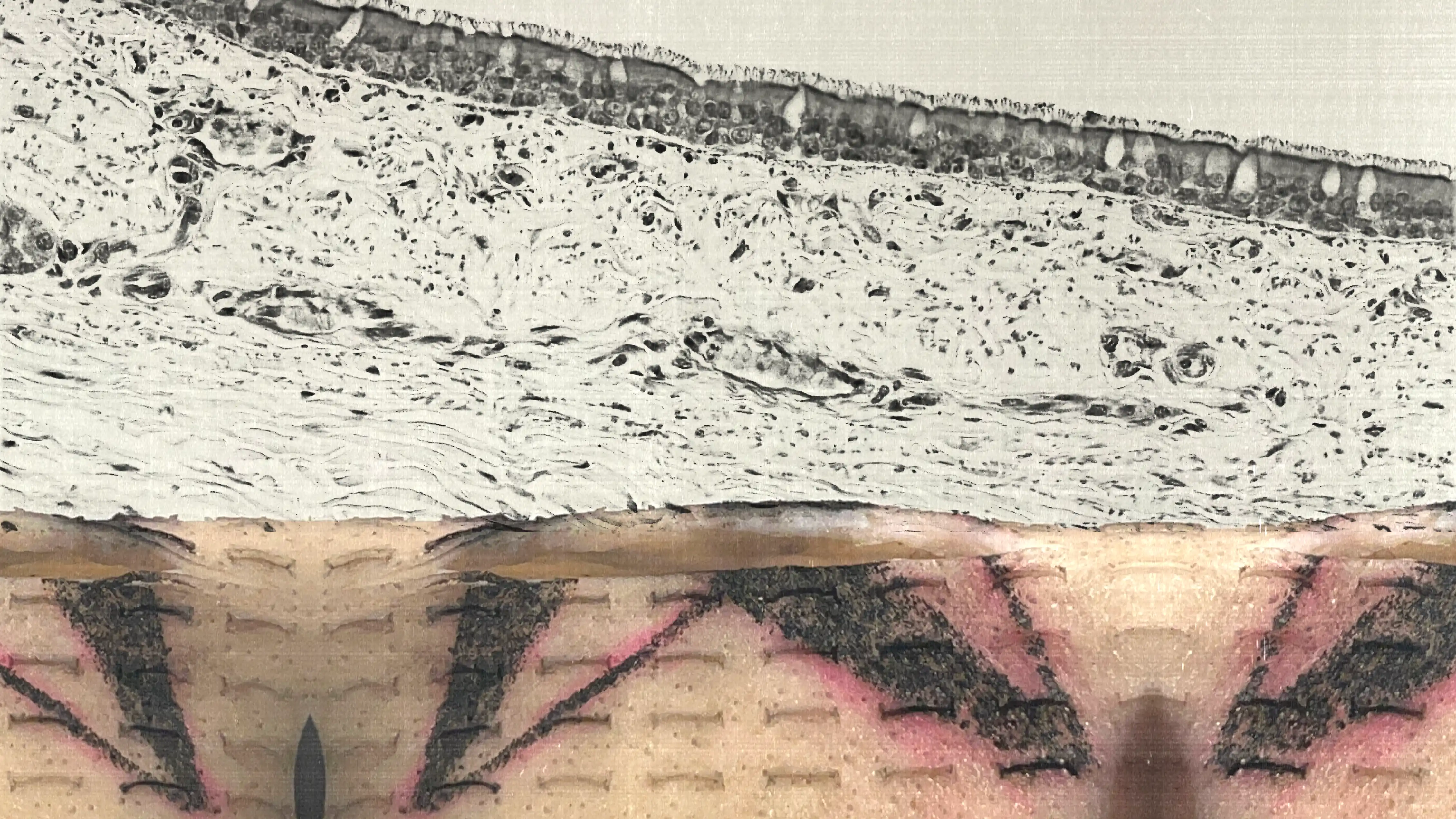
Here's the part that trips people up: the liquid doesn't stay. During healing, your body pulls the carrier out and disperses it, metabolized or flushed through the vascular and lymphatic systems over a few days. What's left behind is the pigment. So when you look at a healed tattoo, you're looking at pigment that the skin held onto after the liquid was long gone.
That's why "the liquid is the ink" is one of the most common misreads out there. The liquid is the delivery. The pigment is the tattoo.
What's in a black bottle
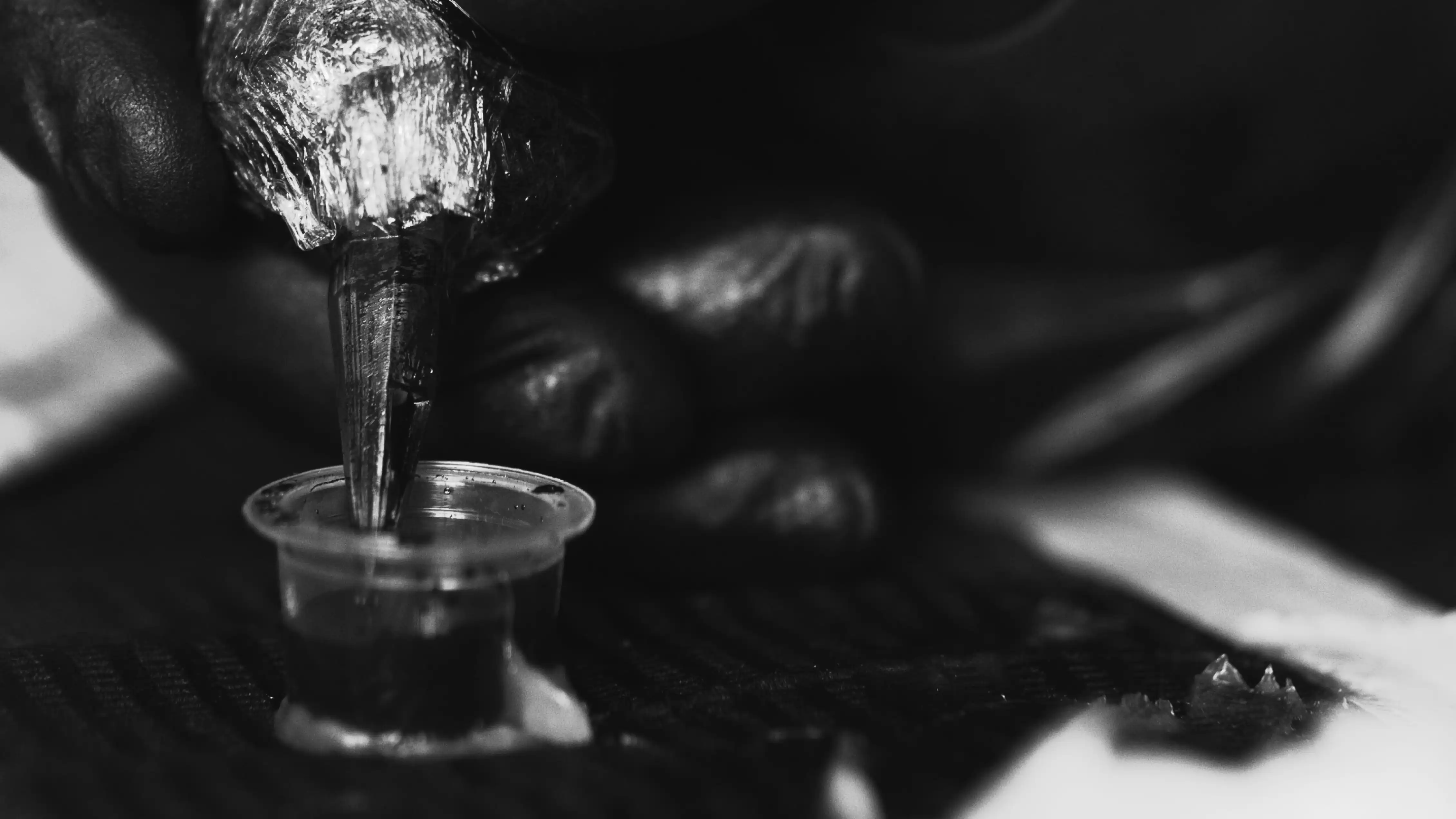
Black is the simplest ink to make, which is part of why a lot of Artists trust it most. A typical black breaks down to something like this:
- Water (Aqua): the primary ingredient
- Carbon black (CI 77266): the black pigment itself
- Propylene glycol: helps suspend the pigment and improves flow
- Glycerin: adds viscosity and smoothness
- Witch hazel (Hamamelis virginiana extract): improves flow, mild astringent
- Isopropyl alcohol: aids sterility during manufacturing
- Benzyl alcohol: preservative
Color is where it gets more complicated. "Black is the safest for me. That's why I don't use color, the ingredients get weird really fast." — David Allen
That's exactly why plenty of Artists build their whole practice on blackwork and never look back.
Where it came from
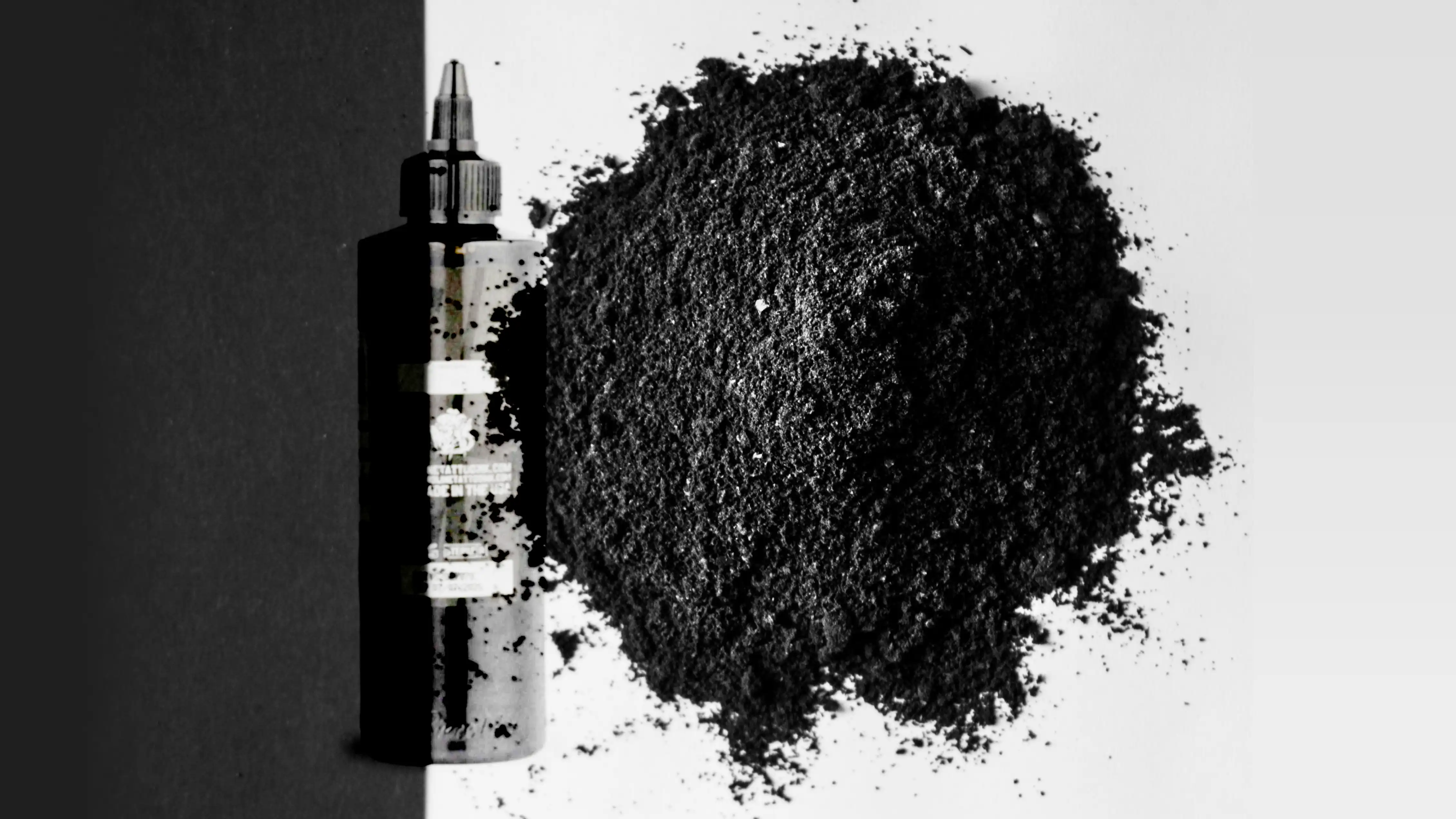
Not that long ago, the Artist was the ink company. Before standardized bottles, tattooers made their own pigment, and any stable black carbon was fair game. Ancient cultures used charred wood, charcoal, soot from oil lamps, pine resin, oils, animal fats, plant extracts. Early electric tattooers kept that going, burning oils or collecting soot and cutting it with distilled water, witch hazel, sometimes Listerine.
Color meant getting resourceful. Artists bought industrial dry pigments straight out of chemical company catalogs and mixed their own. It worked, but consistency was a gamble. Once companies started standardizing pigments, sterilization, and manufacturing, the bottle became something you could actually rely on batch to batch. That shift, from homemade to manufactured, is the whole reason a color you buy today heals close to the color you bought last year.
Why two "identical" colors aren't identical
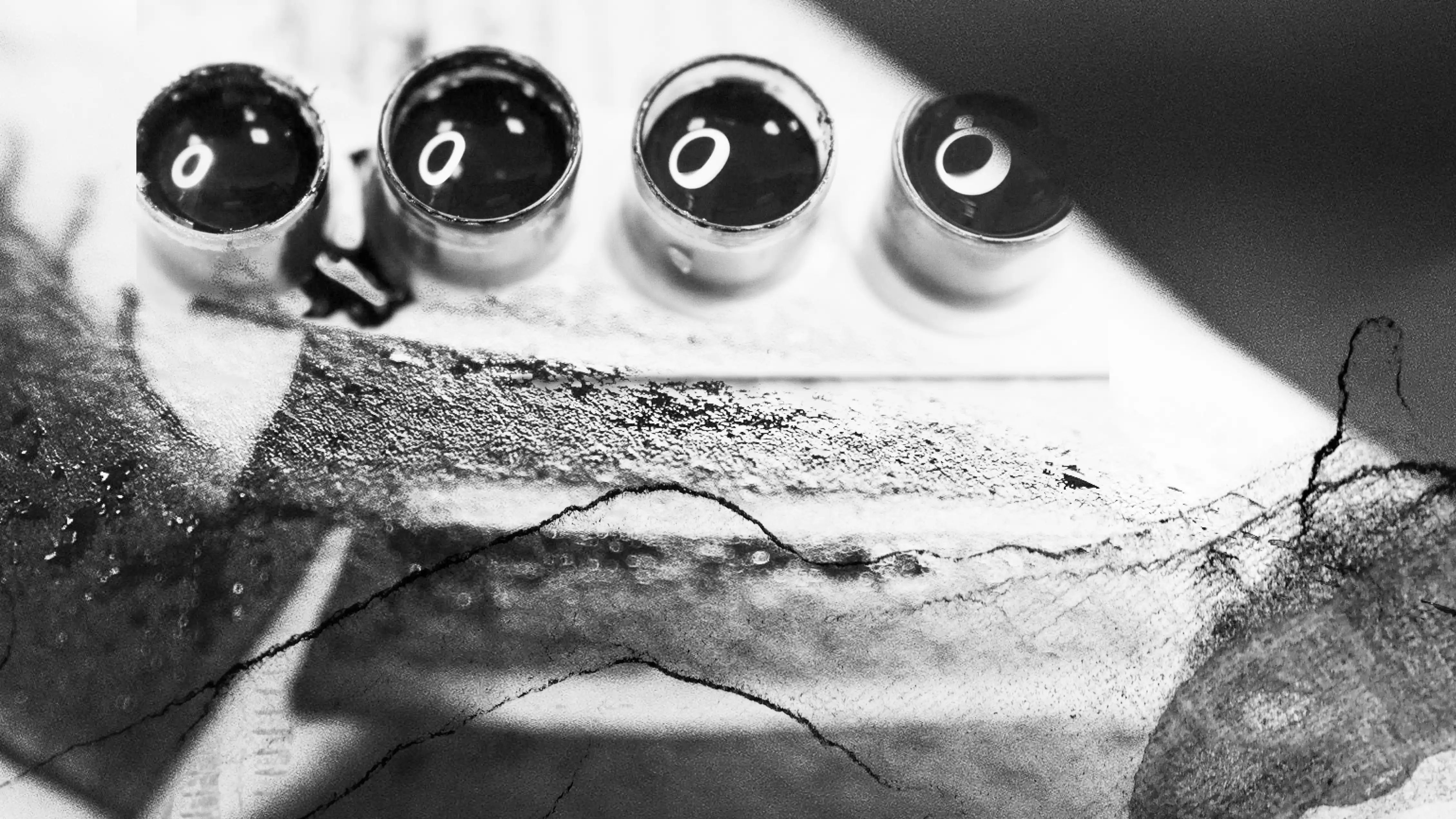
Here's a thing most people outside the trade never realize: most ink companies use the same core pigments. There's a short list that's proven to work best, and everyone pulls from it. Take PB15, one of the most stable blues ever made. Plenty of brands use it.
So what actually separates one brand's blue from another's? The suspension liquid and the particle size. Same pigment, different carrier, different grind, and it packs differently, heals differently, settles differently in the skin. That's why you can't judge an ink by its color name on the label. Two bottles that both list the pigment code can behave like completely different products under the needle.
Artists judge ink by feel, not chemistry
Nobody's reading a spec sheet mid-session. Artists judge ink the way they judge everything: by how it behaves. How smooth it feels going in. How cleanly it wipes away. How it saturates. And then, the real verdict, how it looks once it's healed.
That's also the language of the trade. Packed black. Heavy black. Pigment load. Thin, creamy. Does it settle or does it settle too fast. None of that is on the bottle. It's what you learn by running the ink yourself and watching healed results, which is exactly how most Artists decide what to buy: word of mouth, seeing how their own and other people's work heals, and testing brands themselves.
The safety conversation, without the fear
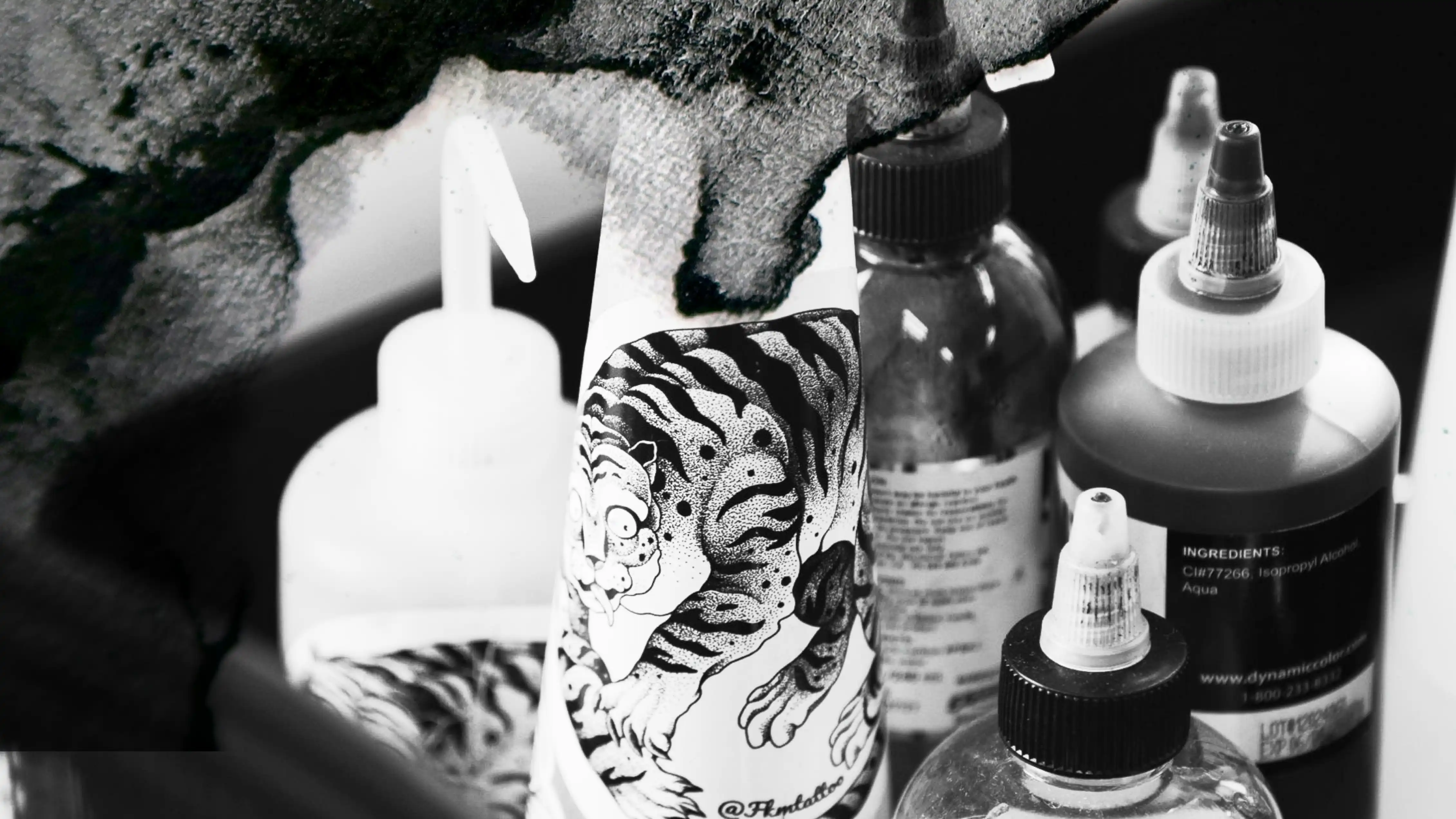
There's a lot of anxiety floating around about what's in ink, so it's worth being straight about it. Some people do react to specific pigments, and the reactions tend to cluster by color. Reds have historically been linked to compounds like cinnabar or cadmium. Blues and darker shades to cobalt or nickel, sometimes as a delayed response. Greens to chromium. Yellows and oranges to cadmium, which also tends to fade faster in sunlight.
That's real, and it's worth knowing as an Artist. But it's not a reason to panic about ink, and here's the useful reframe: the immune system treats tattoo pigment a lot like it treats an implanted medical material, and human bodies tolerate implanted materials all the time. Titanium in bone plates and hip replacements. Cobalt-chromium alloys in knee and hip implants, the same family used in some blue and green inks. Stainless steel pins, silicone implants, polypropylene surgical mesh, the metal alloy stents that hold arteries open. We've been putting foreign materials into bodies for a very long time. Egyptian mummies had prosthetic toes. Roman soldiers had iron dental implants. The body is remarkably good at coexisting with what we put in it.
Where ink is headed
The direction is cleaner. Europe's REACH regulations are pushing manufacturers to reformulate with safer standards and ingredients, and sterility standards keep climbing. Just as importantly, Artists are asking harder questions than they used to, about what's in the bottle, where it's sourced, how it's made. Tighter regulation, better documentation, cleaner manufacturing. That's the trajectory, and it's a good one.
Why this is your business to know
The more you understand what you're actually working with, the more command you have over your craft, your results, and the trust your Clients put in you. That's the whole idea behind CO:CREATE: your work, your knowledge, your business, on your terms. Know your ink the way you know your machine.
Ready to build your practice somewhere that treats it like the profession it is? Set up your profile at cocreate.ink.





Made with tattoo Artists, for tattoo Artists. Run your business your way. Clients find you and book you, no middleman.


Made with tattoo Artists, for tattoo Artists. Run your business your way. Clients find you and book you, no middleman.