
Article
American Traditional Tattoo: Why Clients Are Still Booking the Style That Started It All
American Traditional has been booking for nearly a century. Here's what's driving the demand and how Artists are positioning themselves to capture it.
May 7, 2026
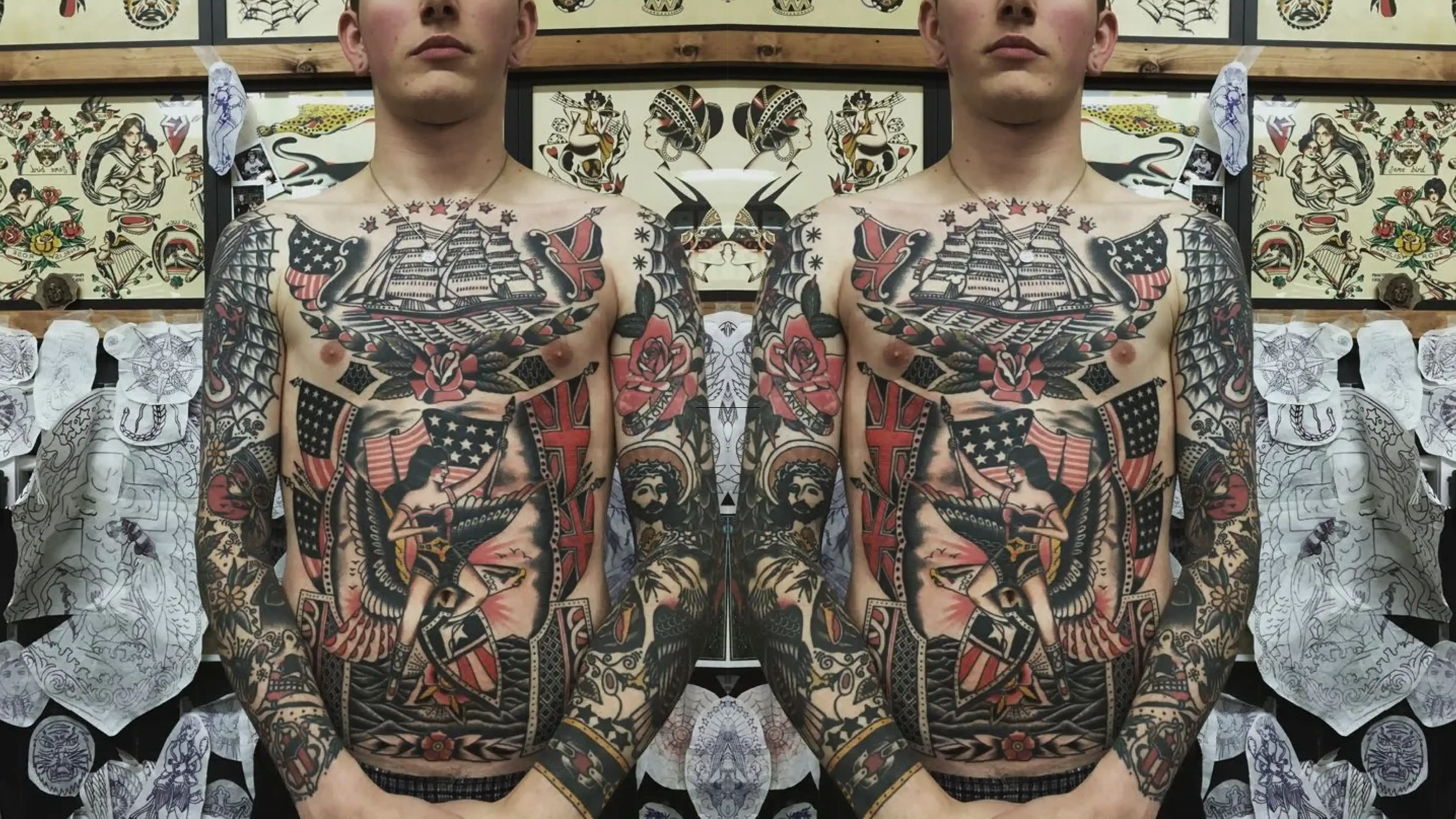
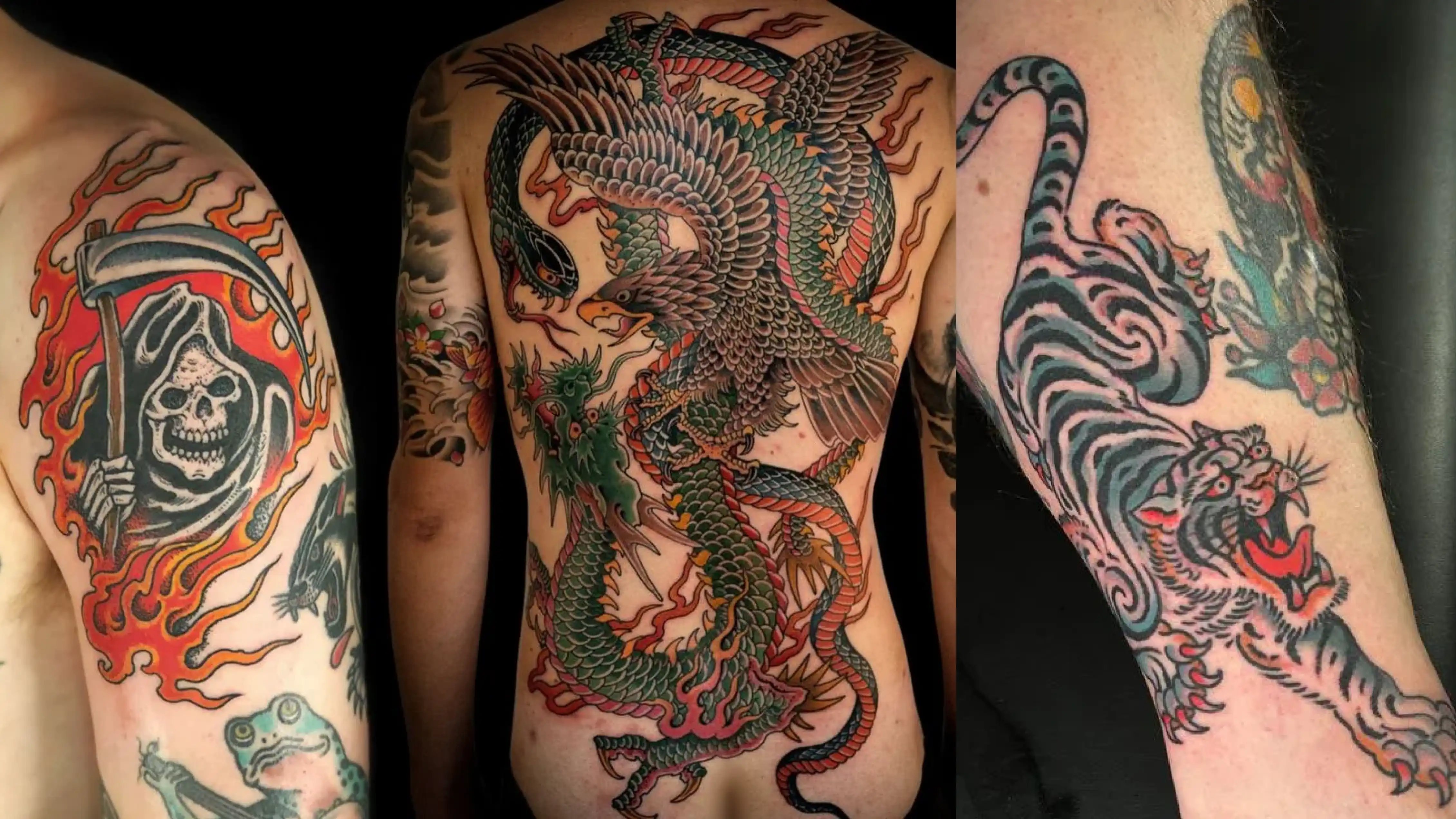
If you're tattooing in 2026, you're booking American Traditional. Walk into any shop in any city and someone has eagles, daggers, panthers, roses, and anchors on the books. The style that shaped commercial American tattooing is still, more than a century in, the most consistent booking lane in the craft.
That's not nostalgia. That's a bet on craft fundamentals. Here's what's driving the demand, what makes the contemporary work distinct, and how Artists positioned in this lane are capturing it on CO:CREATE.
What American Traditional Looks Like
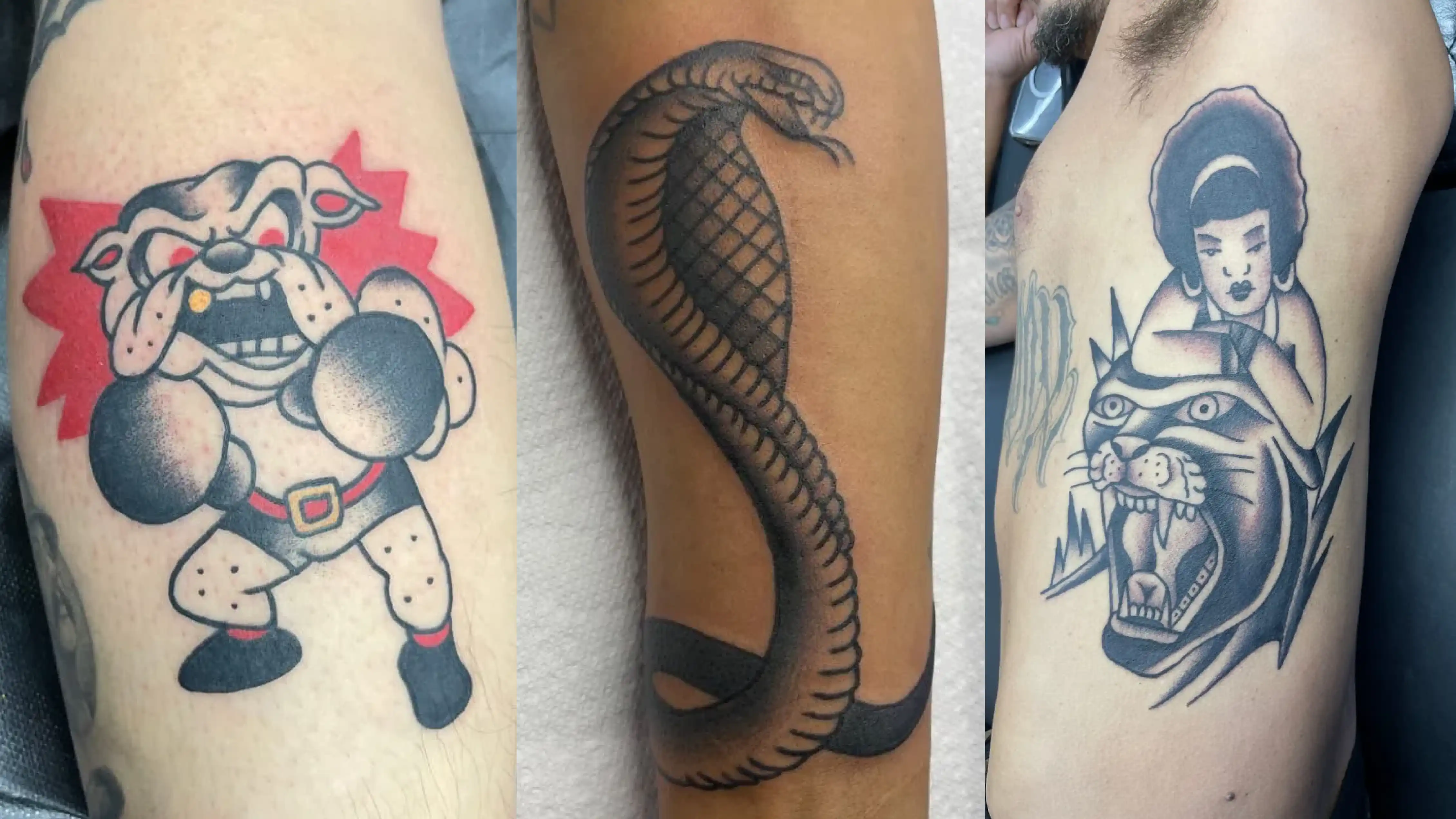
American Traditional has rules. The roots reach back to the 1880s–1890s, but the rules locked in by Honolulu in the 1940s and haven't moved much since. Single line weight. Saturated black. Pepper whip shading. A striking, simple color palette. Folky but legible designs. Eagles, daggers, panthers, roses, anchors, lady heads, swallows, ships. Built to be readable across the room, and built to age across sixty years on skin.
The pioneers were Circus first, then sailors, port-town shop guys, and a tight lineage of craftspeople passing the work hand to hand. Sailor Jerry. Bert Grimm. George Burchett. Stoney St. Clair. Tony Polito. The next evolution came out of San Francisco with Lyle Tuttle, Ed Hardy, Pat Martynuik. The names matter because the work didn't come from a vacuum. It came from sailors with three days off the boat needing something that read fast and aged slow.
Why It Still Hits
American Traditional is the mid-century modern of tattooing. Always cool. Always works. Sits well with anything else on the body. No matter what else a Client has, a Traditional rose or panther will fit alongside any style.
That's a real cultural anchor. Tattoo styles cycle in and out of trend, but American Traditional doesn't have to be in fashion to be in demand. The visual language is too embedded in tattoo culture to fall off. Even Clients who've never set foot in a tattoo shop know the imagery of an eagle, a swallow, a heart with a banner. Those are permanently in the tattoo lexicon at this point.
It also doesn't forgive. Every line is visible. Every saturation choice is visible. Every shading transition is visible. There's no busy detail to hide behind. If a line wobbles, you'll see it from across the room. That's why the OGs treated it like religion. Finding tools that can push a heavy line that heals well, learning how to use them, understanding skin at a different level. That's the craft baseline. American Traditional is intended to be insanely simple, and there's no room for mistake.
The Quiet Argument: Crawl, Walk, Run
Here's the harder conversation, because it matters. The current wave of American Traditional Artists are technically capable in a way the original era wasn't. Better machines, easier access to reference and education. What used to be top-tier work is, in 2026, an entry-level expectation.
That's a good problem but a real one. The risk is that easy access to modern predecessors' work has flattened the lineage. Younger Artists are replicating their immediate predecessors instead of researching where the predecessors got it. The folk inside the style gets watered down each cycle. The spacing decisions, the color logic, the subject choices, all flatten when an image gets replicated thousands of times by tens of thousands of people without anyone tracing the source.
The case for studying the OGs in a saturated landscape is straightforward: research, educate, replicate. Crawl, walk, run. Read the books that aren't online. Talk to the artists who lived through the eras. Find the original references your favorite contemporary Traditional piece is built on, and study what choices the original artist actually made. Then bring something to the lexicon instead of regurgitating it.
The outliers in the current wave are the ones doing this. They show up in the proportions, in the line weight choices, in the reference selection, in the color palettes. Most viewers won't notice. The ones who do, do.
The Artists Redefining American Traditional on CO:CREATE
Austin Maples (@austinmaples) is the most-booked American Traditional Artist on the platform, with over 200 paid bookings. Based in Los Angeles since 2010, Austin's work blends American Traditional with smooth black-and-gray, building large-scale sleeves and back pieces with the same care he brings to smaller meaningful work. Austin describes American Traditional as the mid-century modern of tattooing, and the description holds.
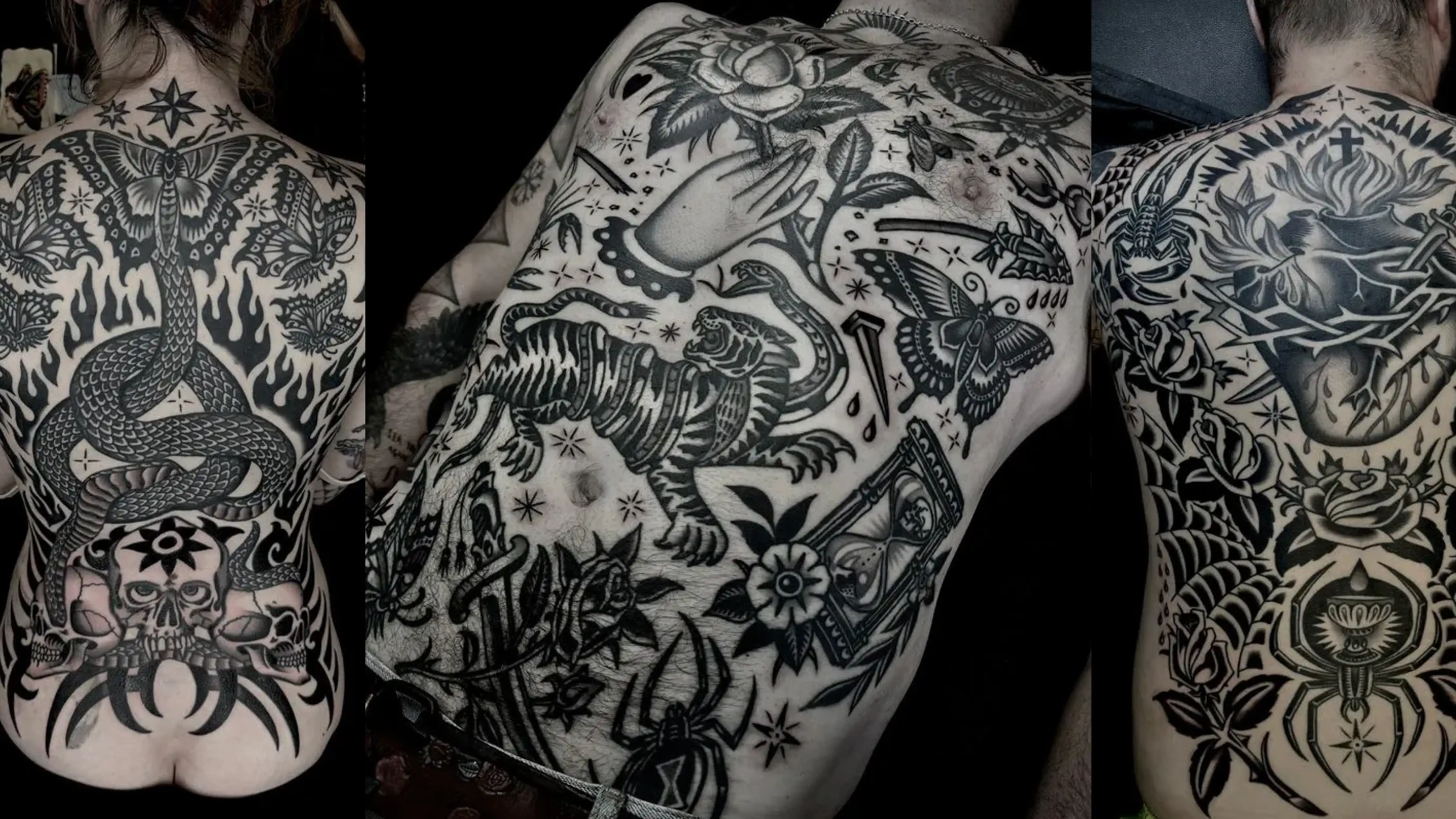
Ross K. Jones (@ross-jones) tattoos at Idle Hand in San Francisco and apprenticed under Theo Mindell at Spider Murphy's in San Rafael in 2001. Ross is the only Artist in the top ten with American Traditional as his only listed style. That's purity of positioning. A graffiti background and a printmaking BFA show up in the line weight and composition choices. Twenty-five years in, the lineage from Spider Murphy's still moves through his work.
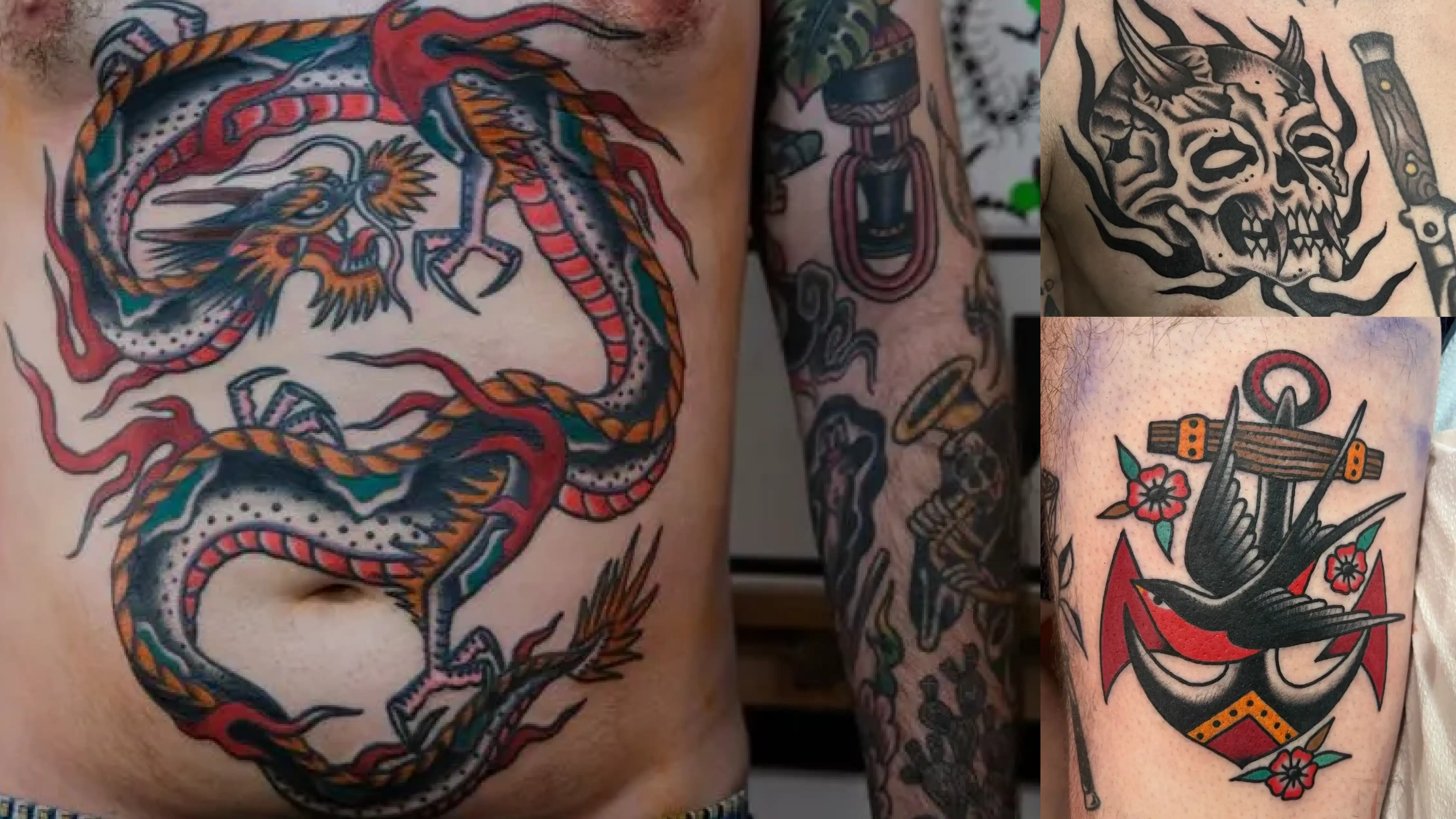
Gali Pokes, who tattoos as Sad.In.Jail (@sadinjail), works out of Outer Limits Tattoo in Long Beach, the oldest operating tattoo shop in the United States. Gali tattoos by hand poke, specializing in vintage flash, lady heads, and bold outlines pulled from historical French and Russian tattoo traditions. Her CO:CREATE profile carries 27 active Wanna Do Designs, organized into collections like Vice and Virtue, Pinups, Spooky Flashset, and Fairytales of 1957. Books open for both Wanna Dos and Custom. Hand poke plus American Traditional plus the oldest shop in the country is a position no one else holds.
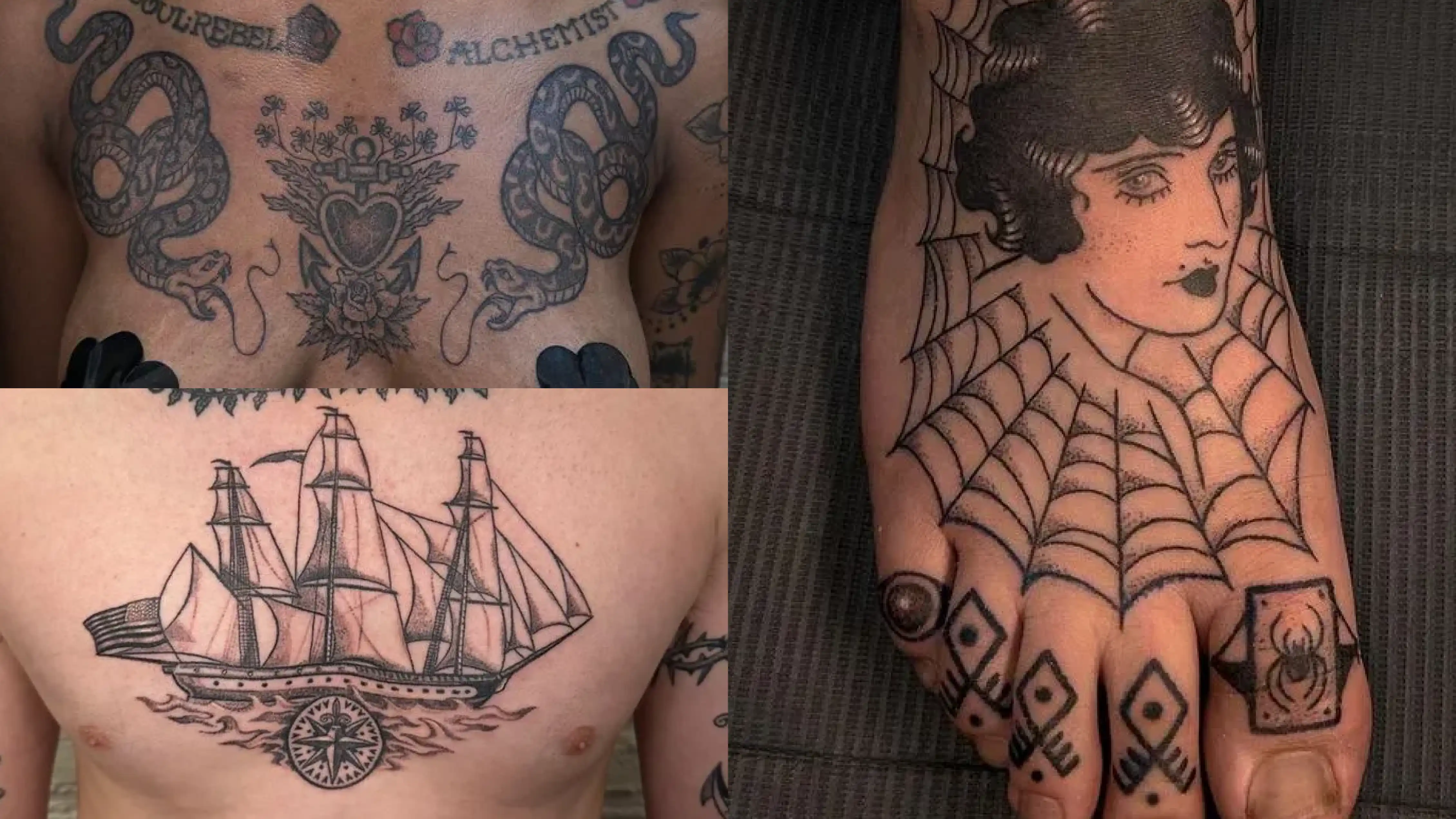
Jason Tyler Grace (@jason-grace) tattoos at House of Grace Tattoo in Portland and travels conventions across Salt Lake City, the Hudson Valley, Rochester, and Long Beach. Twenty-five-plus years in. American Traditional sits alongside Japanese, Engraving, Chicano, Irezumi, and Ornamental in his portfolio. The mark of an Artist who has studied the broader traditions and pulls cross-referenced choices into the Traditional work.
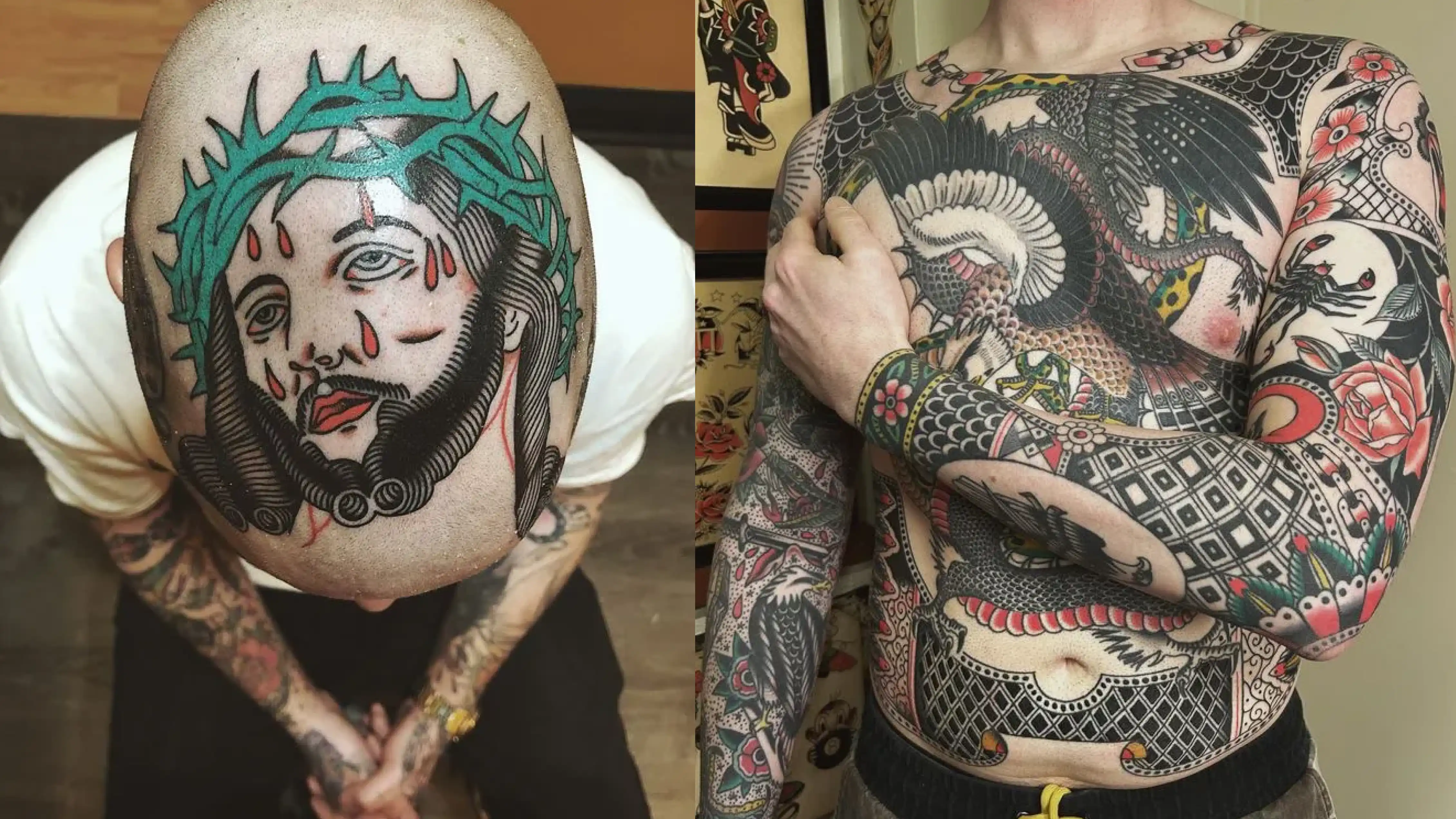
Rich Hadley (@rich-hadley) is a UK-born tattooer based in New Haven, Connecticut, specializing in large-scale tapestry-style traditional work that pulls from both Western and Eastern source material. American Traditional only on the styles tagged. Books open for Wanna Dos and Custom. Tapestry-scale traditional is a particular discipline, one piece that fills a panel and reads as a unified composition rather than a collection of standalones.
Slowdeath, also known as BJ Storms (@ogslowdeath), owns and operates Love Always Destroys Hate in the Aurora Arts District in Aurora, Colorado. Two decades of tattooing and travel. Best known for pet portraits and bold traditional. Slowdeath sits at the intersection of American Traditional and a few other lanes (Afro Americana, Micro Realism, Photo Realism), bringing portraiture rigor into Traditional subjects.
What This Means for Artists Positioning Themselves
If American Traditional is your work, the practical move on CO:CREATE is to make sure your profile reflects it. Style tagging, portfolio focus, and Wanna Do Design naming all inform whether Clients searching for Traditional find you. We pulled the top ten Artists by paid American Traditional bookings on the platform, and only six had American Traditional explicitly tagged in their style dropdown. The other four are getting American Traditional bookings through portfolio signal alone, which works, but leaves search-driven discovery on the table.
A few things that move the needle:
- Tag American Traditional in your style list if your portfolio shows it. Even if it's one of several styles you work, the search routing matters.
- Use Wanna Do Designs to anchor your Traditional lane. A Pinups collection, a Vintage Flash collection, a Lady Heads collection, these read as both portfolio proof and bookable inventory. The Wanna Dos do the talking when the style dropdown undersells you.
- Lean into the lineage in your bio. Where you apprenticed, who you studied under, what shop tradition you carry. These are credibility signals Traditional Clients pay attention to. The OG ethos still moves the needle.
- Show up-close work. Tight crops on line weight, saturation, and shading are what stop the scroll. Wide trophy shots without visible craft detail get an eye-roll from anyone who can read the work.
The Takeaway
American Traditional has been booking for more than a century because the rules came from the work and the work still holds. The Artists pushing it forward in 2026 are the ones doing the lineage research, owning their positioning, and treating the simple style with the OCD seriousness it actually requires.
If this is your craft, your profile should say so. CO:CREATE is where Clients are searching by style.
Set up your Artist profile on CO:CREATE.


Made with tattoo Artists, for tattoo Artists. Run your business your way. Clients find you and book you, no middleman.


Made with tattoo Artists, for tattoo Artists. Run your business your way. Clients find you and book you, no middleman.