
Article
Skin Science for Tattoo Artists: The Biology Behind Better Tattoos (2026)
How skin layers determine whether a tattoo heals crisp or blows out, why your immune system holds ink in place forever, and what skin physiology means for the craft of tattooing.
June 27, 2026
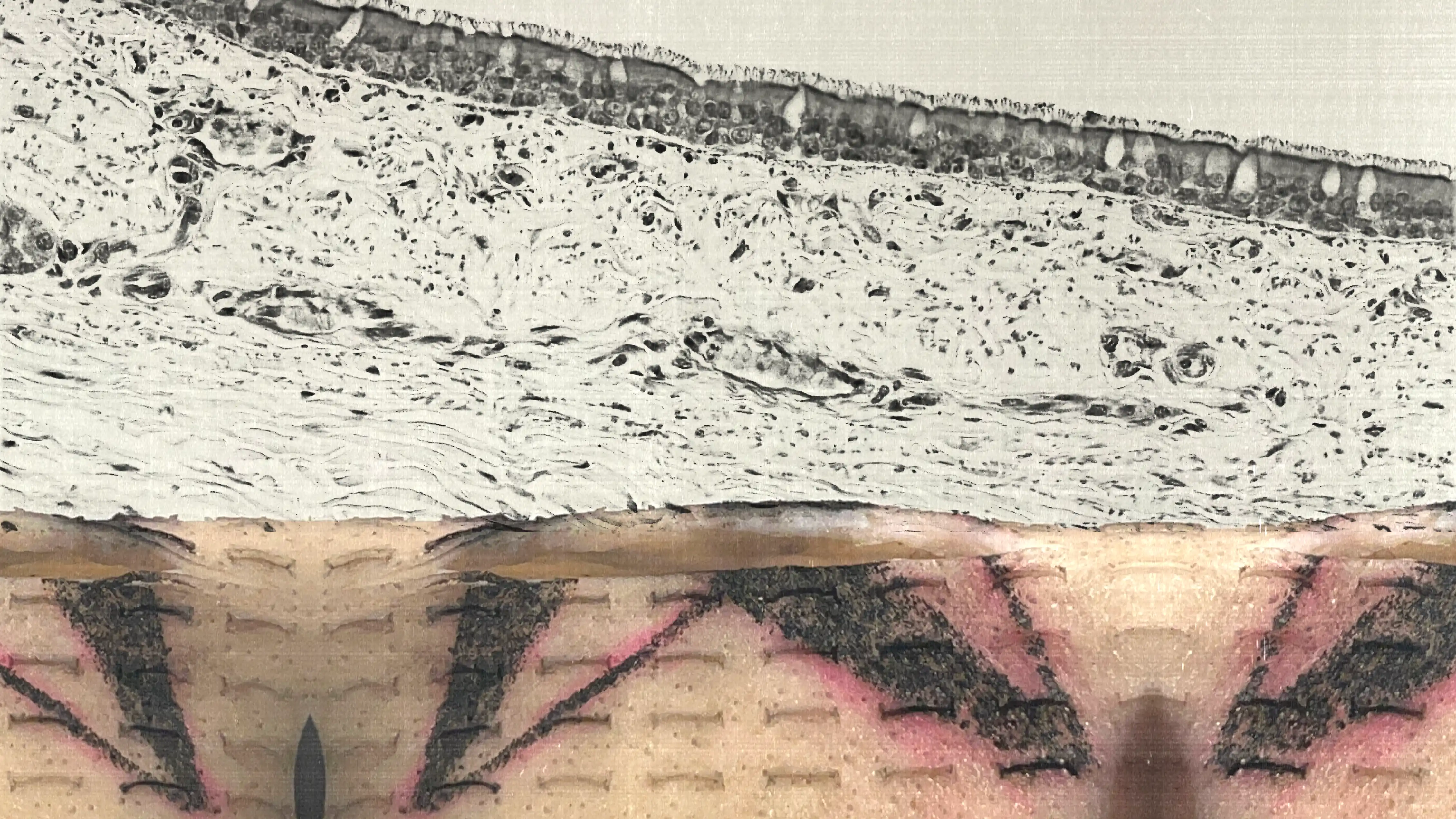
Most Artists learn pressure before they learn why pressure matters. The reason it matters is sitting right beneath the needle: Skin is composed of 3 distinct layers, made from three completely different tissue types, each of which does something different to ink. Understanding what your needle is actually hitting, why, and where it's going changes how you think about every piece you put down.
What you're actually working with
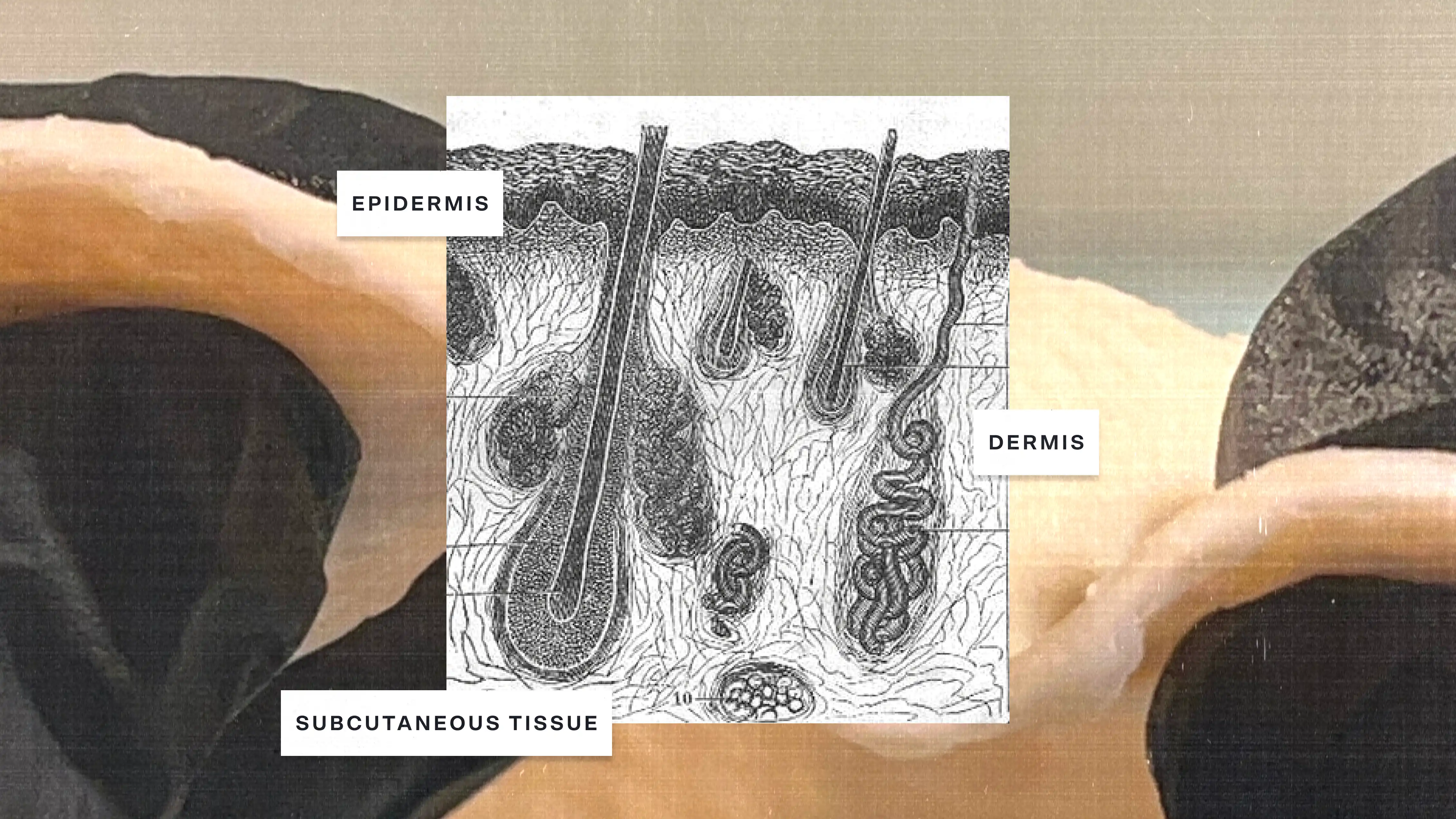
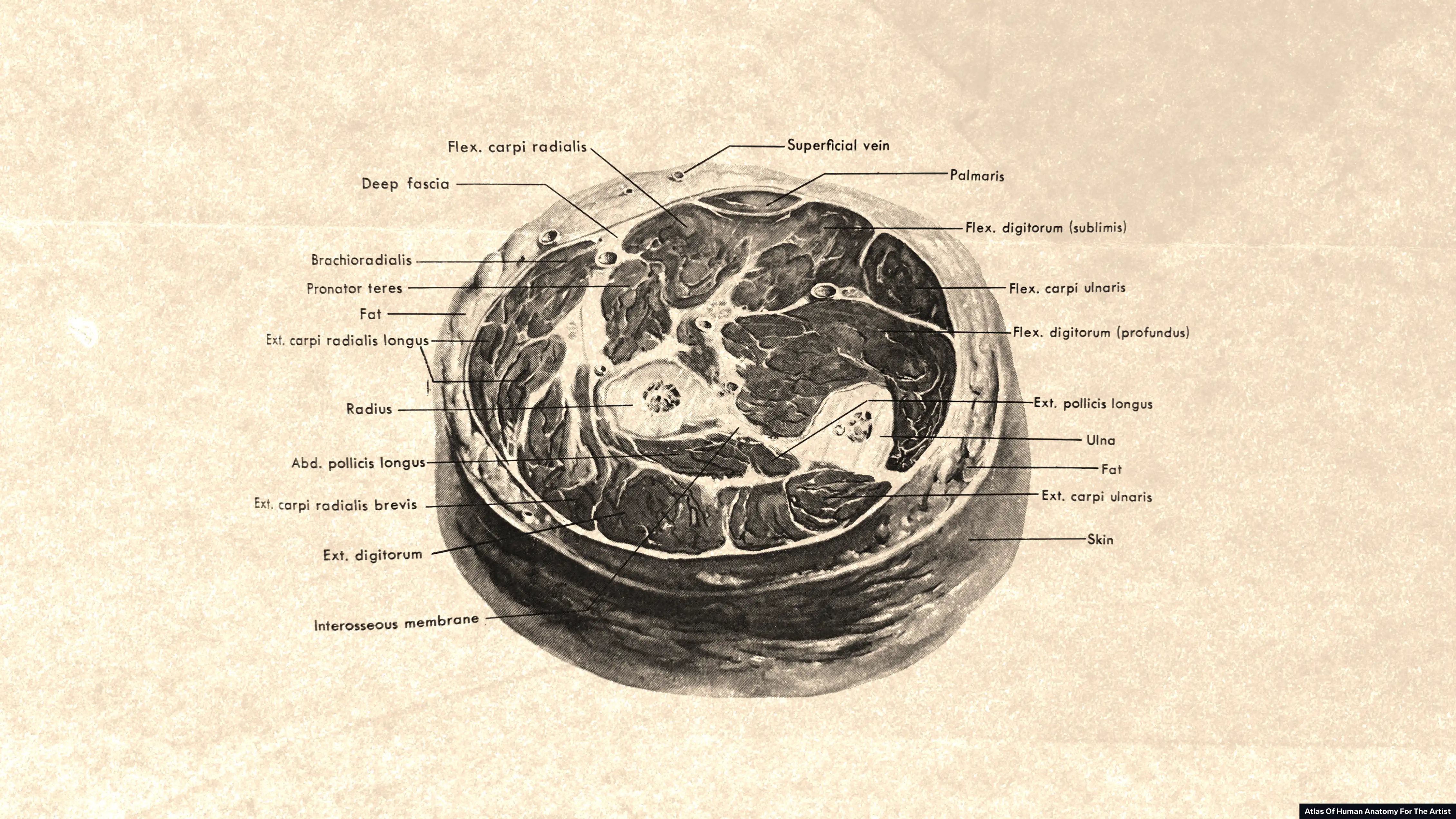
Skin isn't a surface. It's a three-layer organ, the largest organ in the human body, and the layers are completely different from each other in structure, function, and what they do to tattoo ink.
The outermost layer is the epidermis. It's thin, about 0.1mm, and packed with cells that cycle constantly: new cells push upward from the bottom, flatten out, die, and flake off. The full cycle takes about four weeks. Any ink that gets deposited here during tattooing goes with it. This is why healing in the first few weeks affects what stays.
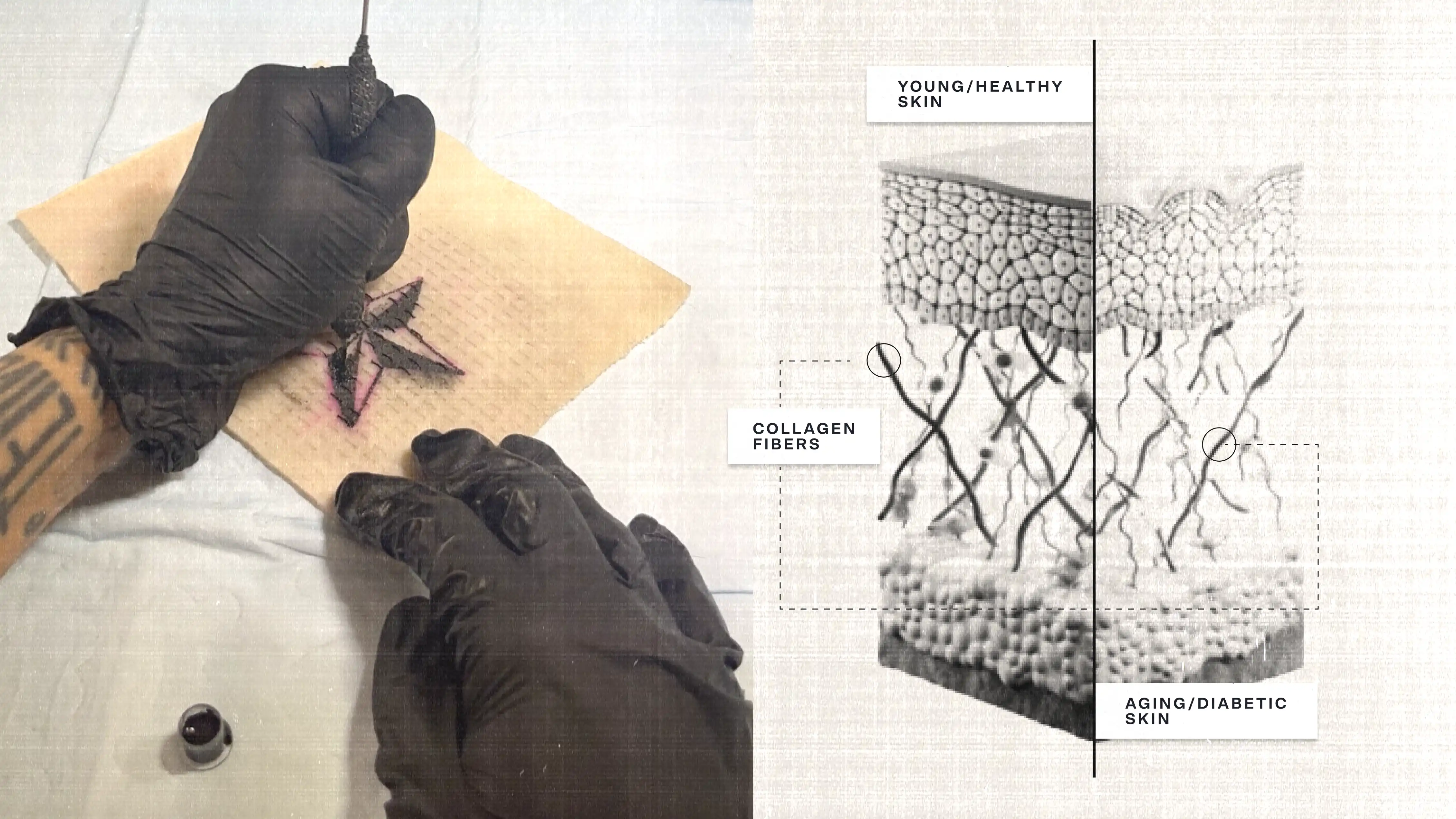
Below that is the dermis. This is the target. The dermis is dense connective tissue: collagen fibers running in every direction, giving skin its ability to be pulled and stretched from any angle. Ink suspended in the collagen matrix stays put. But getting it there is only half the story.
The bottom layer is the hypodermis, or subcutaneous layer. This is fatty, adipose tissue. Think about what happens when you mix ink with oil. It doesn't hold a crisp line. It spreads. Ink in the hypodermis blurs, bleeds outward, and appears on the surface as a blowout.
Your immune system is holding your tattoo together
Here's the part most people don't know: your body never stops trying to remove your tattoo.
A needle hitting skin 50 to 3,000 times per minute creates real trauma. Your immune system responds the same way it always does: inflammation. White blood cells called macrophages flood the site. Their job is to break down and remove whatever doesn't belong there.
The problem: tattoo ink isn't a virus or a bacterium. Macrophages can't digest it. So they do the next best thing: contain it. Surround the ink. Keep it from migrating. When a macrophage dies, it releases the ink. A new macrophage shows up immediately and takes over.
That cycle runs for your entire life. Your tattoo is a permanent negotiation between ink and your immune system.
Why tattoos fade
Some ink escapes in that process. As macrophages die and release their contents, smaller broken-down ink particles get picked up by the lymphatic system. Biopsies on lymph nodes distant from tattoo sites have found ink there. It travels, and it doesn't come back. UV light also breaks down ink particles at the surface, which is why sun exposure accelerates fading.
Tattoos are relatively permanent, with changes over time. That's not a flaw. It's just biology.
Blowout is an anatomy problem
When Artists talk about blowout, it's usually framed as a technique issue. The more precise framing: it's an anatomy navigation problem.
The dermis is the target. The hypodermis is just below it. Ink that crosses that boundary hits fatty tissue and spreads. You can see it through the skin surface: blurred lines, a haze around the tattoo that wasn't in the original design.
The variable most Artists learn by feel before they understand why: skin thickness changes by body location. The dermis on your mid-back is substantially thicker than the dermis on your lower leg, your wrist, or your ribs. The same pressure that sits cleanly in the dermis on a back piece can push straight through to the hypodermis on a thinner placement. Blowout isn't the same mistake in every location. It's the same physics responding to different anatomy.
What this means for the craft
Pressure control isn't one setting. It adjusts to placement. Needle speed (anywhere from 50 to 3,000 passes per minute) is one variable. Depth, skin tension, body location, the density of the dermis you're working in: these are all part of the same calculation.
Understanding the anatomy doesn't make tattooing more complicated. It gives the right name to what you're already doing by feel, and it gives you a framework when something unexpected happens. A blowout you can explain is a blowout you can prevent next time.
Your work lives in the dermis. Know what it takes to get it there. Be findable.

Made with tattoo Artists, for tattoo Artists. Run your business your way. Clients find you and book you, no middleman.


Made with tattoo Artists, for tattoo Artists. Run your business your way. Clients find you and book you, no middleman.