
Article
Made Real: The Tattoos That Don't Look Like Tattoos
What trompe l'oeil tattooing actually is, how Artists make stickers, patches, stained glass, and folded paper look physically real on skin, and the Artists booking it on CO:CREATE.
June 13, 2026
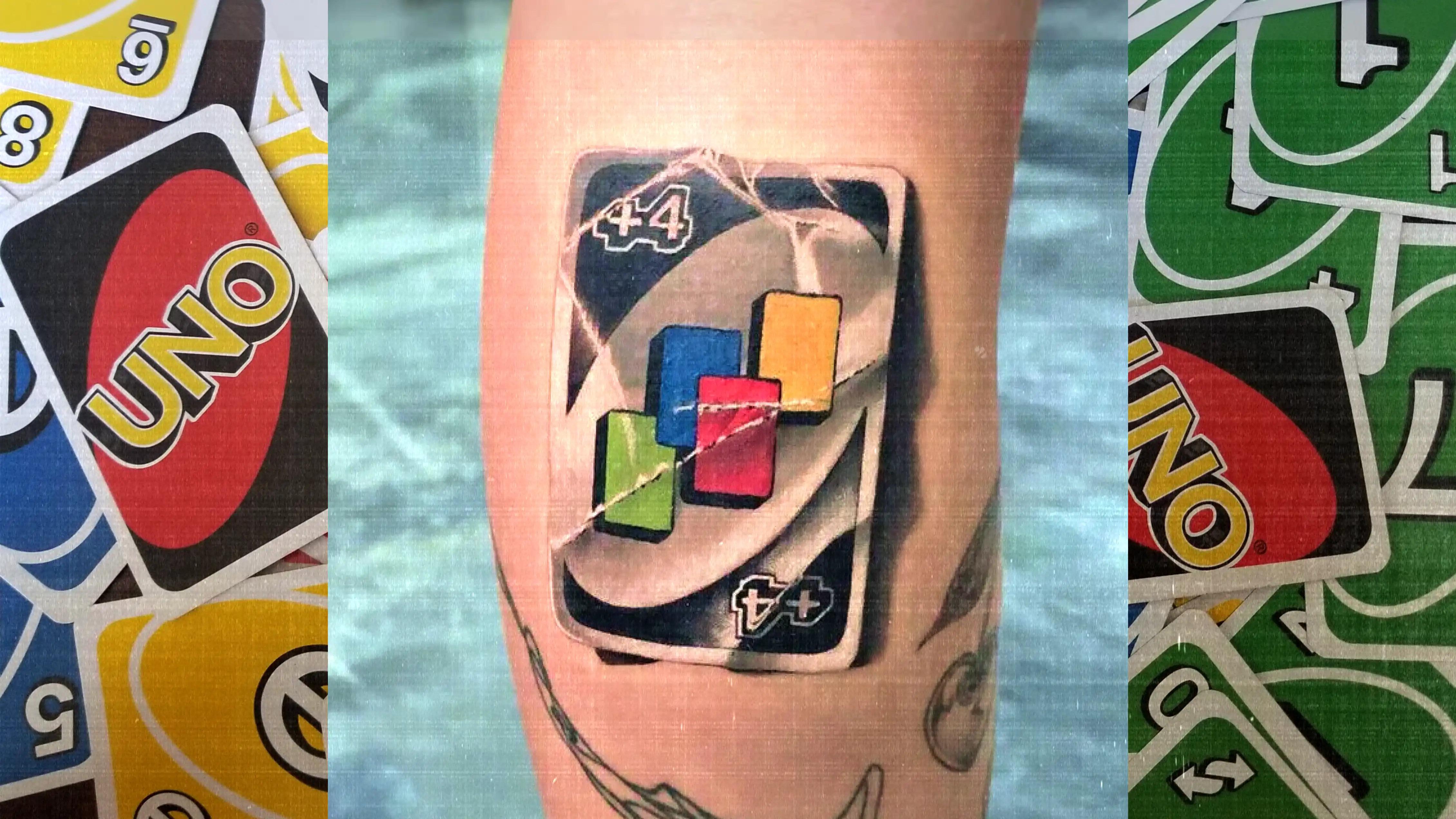
Look at it twice. The first time, you see a sticker. A cartoon character, white border, rounded corners, peeling at the edge. The second time you realize it's not peeling off anywhere. It can't. It's on skin.
That's the whole trick. And in 2026, it's one of the most-tattooed ideas in the craft.
What "Made Real" actually is
Trompe l'oeil is a French term that translates to "deceives the eye." In painting, it's the technique of rendering an object so realistically that viewers question whether it's actually there. A painted window that looks like a real window. A fly on a canvas so believable people try to brush it away.
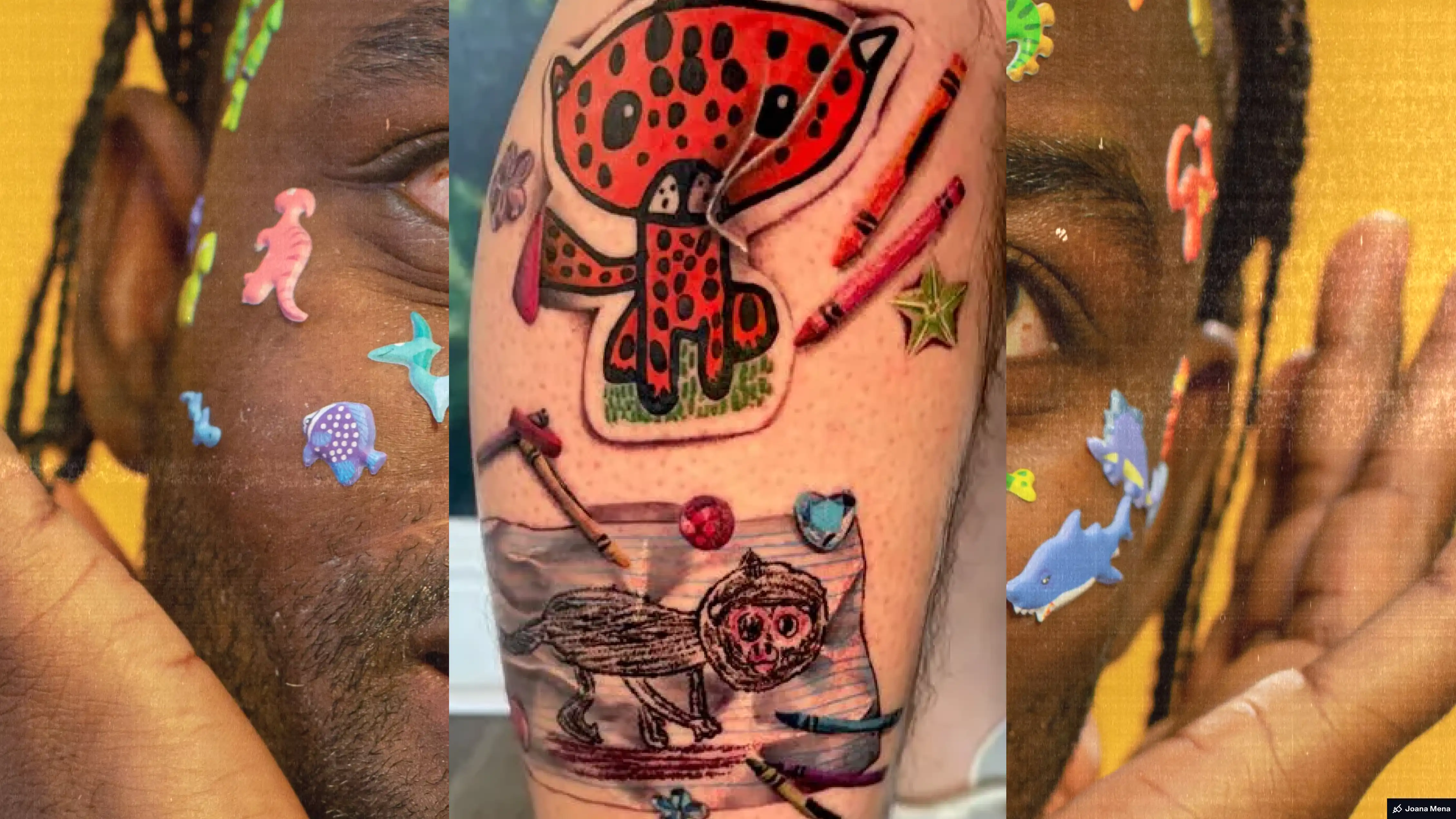
In tattooing, it's the same move applied to pop culture: an object, a character, a piece of nostalgia, rendered not as a tattoo of the thing but as the thing itself sitting on skin. The white edge of a peeled vinyl sticker. The embroidered texture of a patch sewn onto fabric. The light coming through leaded glass. A folded piece of paper resting on the forearm.
These aren't tattoos of stickers. They are stickers. At least, that's what the eye says.
Why it's everywhere in 2026
The sticker and patch aesthetic has been everywhere for years. Skateboard decks, laptop covers, jean jackets, backpacks, water bottles. Pop culture nostalgia as collectible objects, layered on top of other objects, building a visual language of personality.
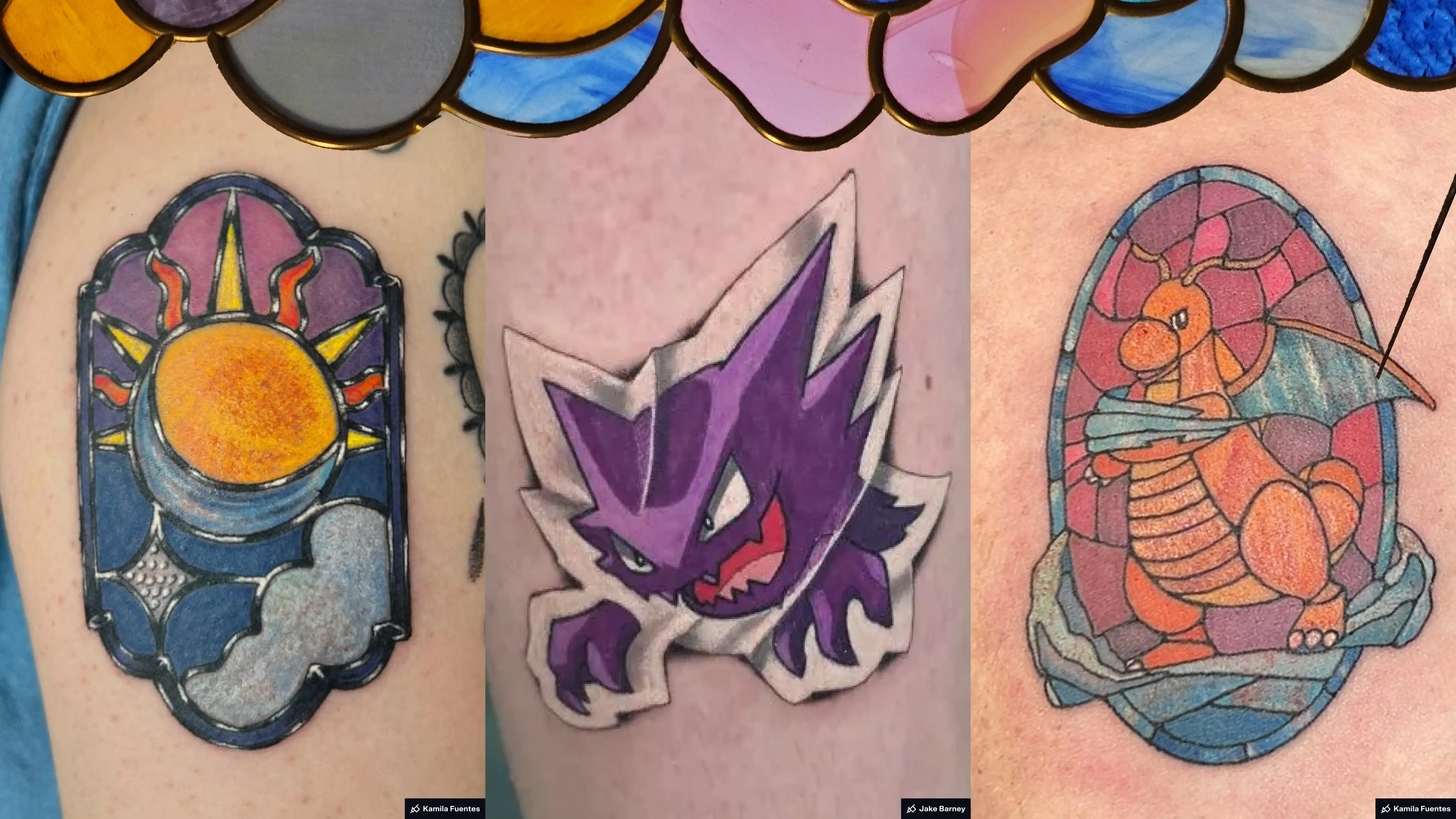
The tattoo version arrived because Artists got precise enough to execute it. Hyperrealism techniques, sharp fine line, the ability to render cast shadow and surface texture at a small scale, those are what make a sticker look like it's actually peeling off skin. Without the craft, it reads as a flat illustration. With it, someone does a double-take.
The four forms
These are the four executions that define the Made Real space right now.
The peeled sticker. Defined by the white vinyl edge and the shadow underneath, implying the sticker is lifting away from skin. The illusion depends entirely on the cast shadow being exactly right.
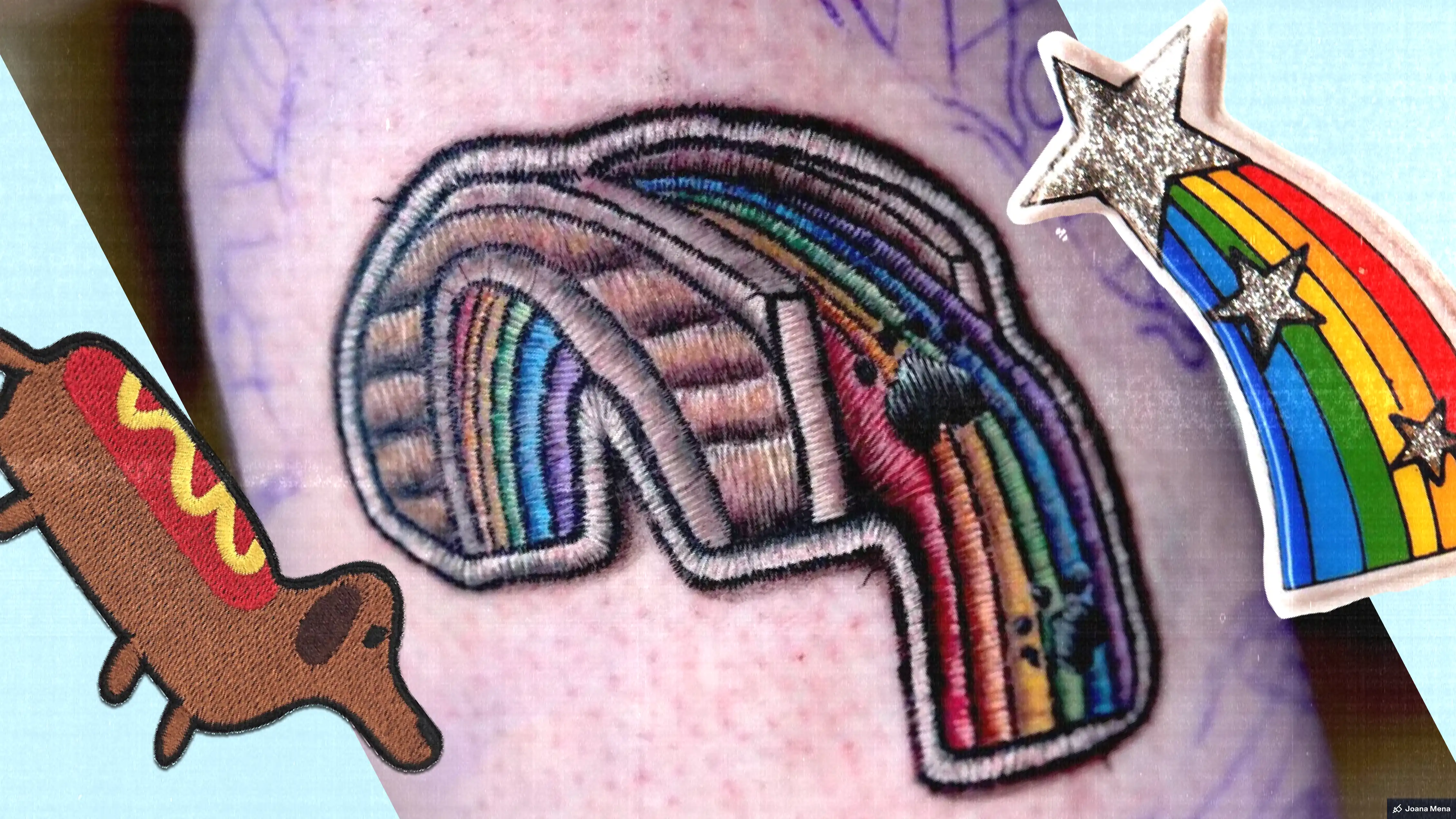
The stitched patch. Embroidery rendered in ink. Each visible "stitch" is tattooed individually, the thread following the pattern of actual embroidery on fabric. Done well, it reads as a patch that could be unpeeled and sewn onto something else.
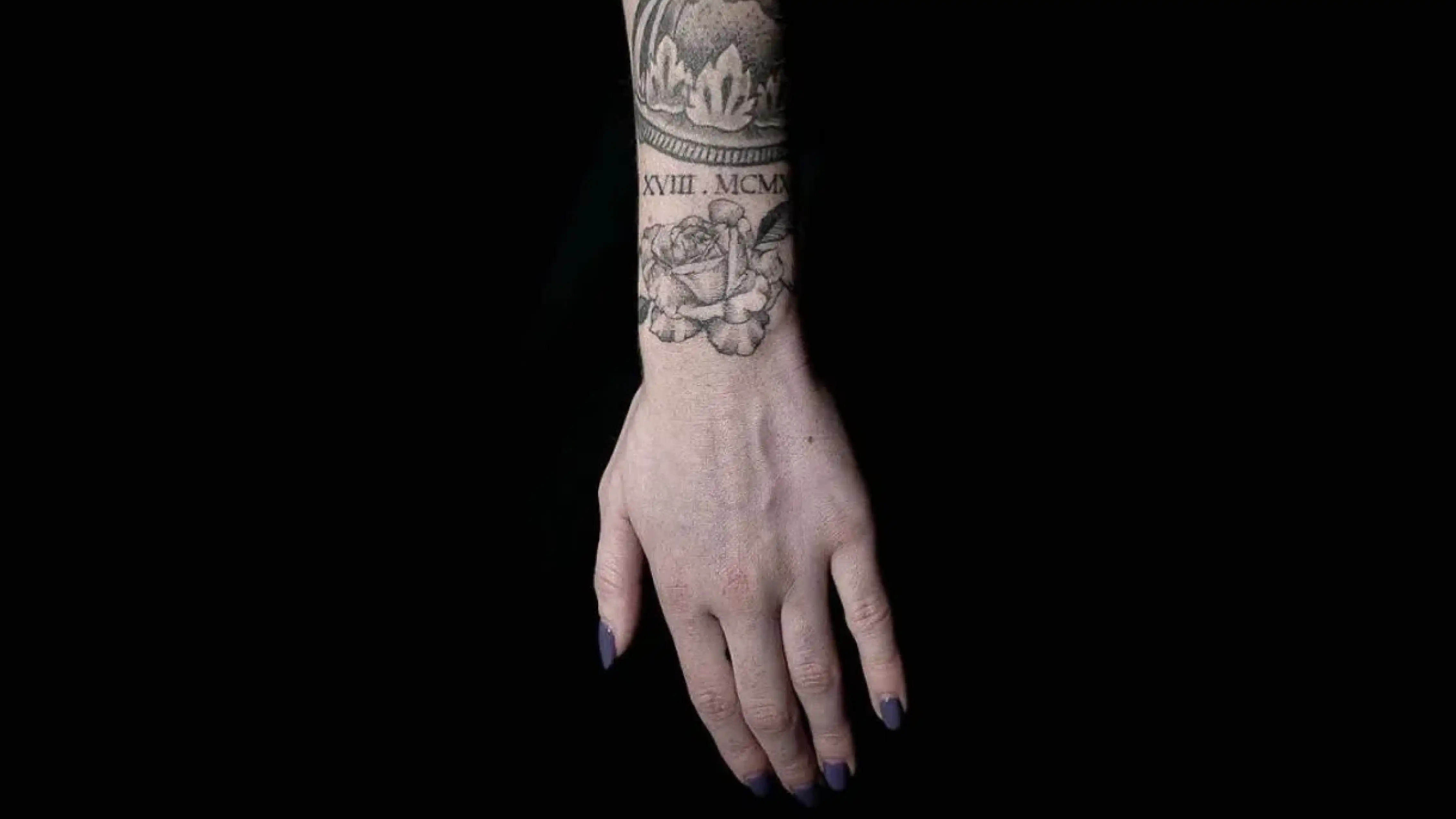
The stained glass piece. Leaded glass rendering in skin. Light appears to pass through sections of color divided by dark lines, the same structure as a cathedral window, scaled to a palm or a shoulder.
The folded paper. A piece of paper, origami, a folded note, a ticket stub, rendered so it appears to have actual fold lines, crease shadows, and physical weight. The hardest of the four to execute convincingly.
All four depend on trompe l'oeil technique: cast shadow, surface texture, dimensionality. The object has to behave like an object.
The Artist who defined it
No one has pushed the Made Real concept further or more consistently than Flipshades (@flipshades). If you want to see where the technique is going, his work is the benchmark. Studying his portfolio is the fastest way to understand what the form can do.
Who's booking Made Real on CO:CREATE
These are the Artists bringing this technique to Clients on CO:CREATE right now.
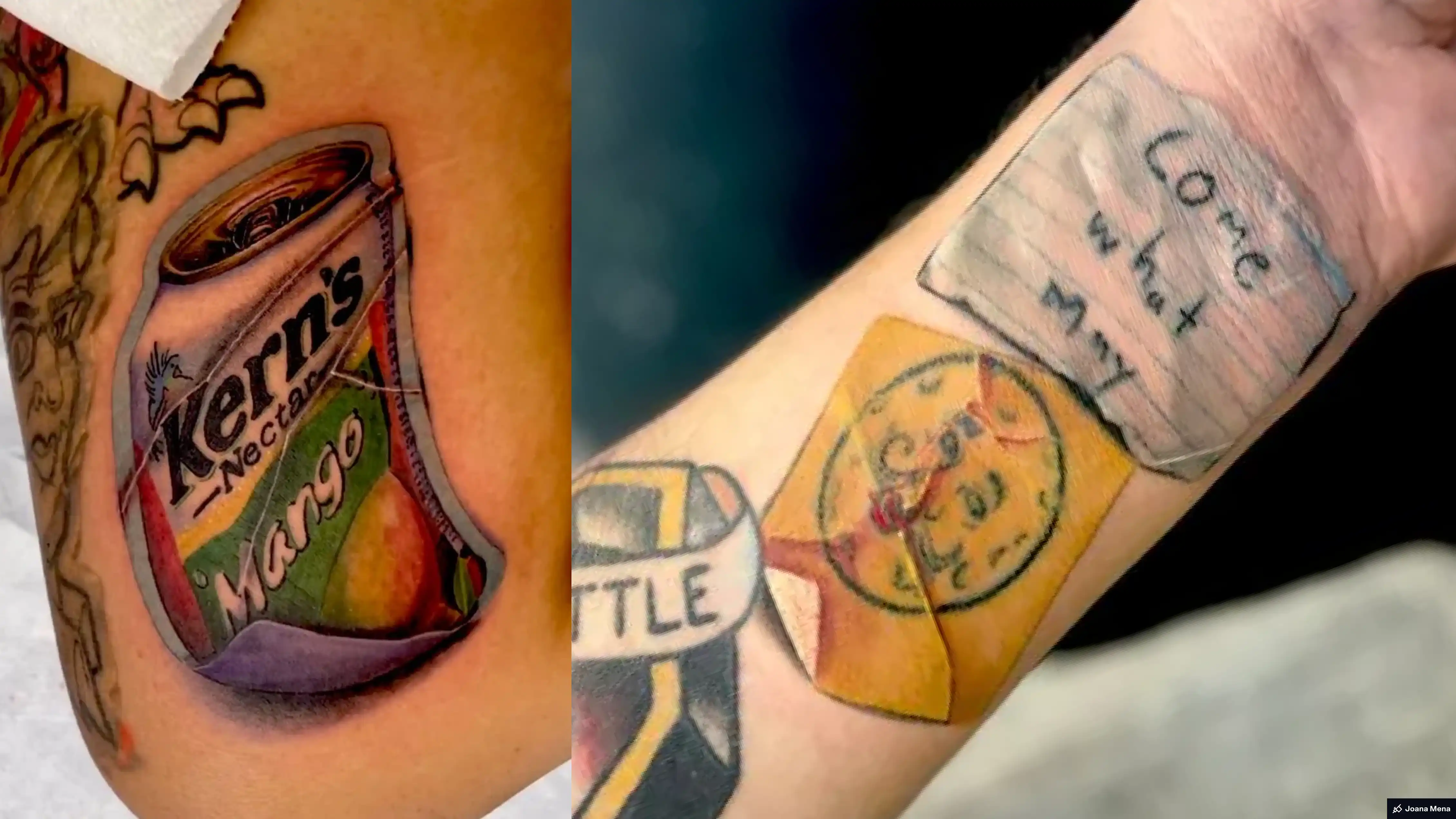
Joana Mena, tattooing as @itsinkedbyjo, brings hyperrealist precision to sticker and patch work. She's a color-only Artist who specializes in realism and surrealism, tattooing out of Formula Tattoo in Addison, Texas. Her made-real pieces read as objects first and tattoos second.
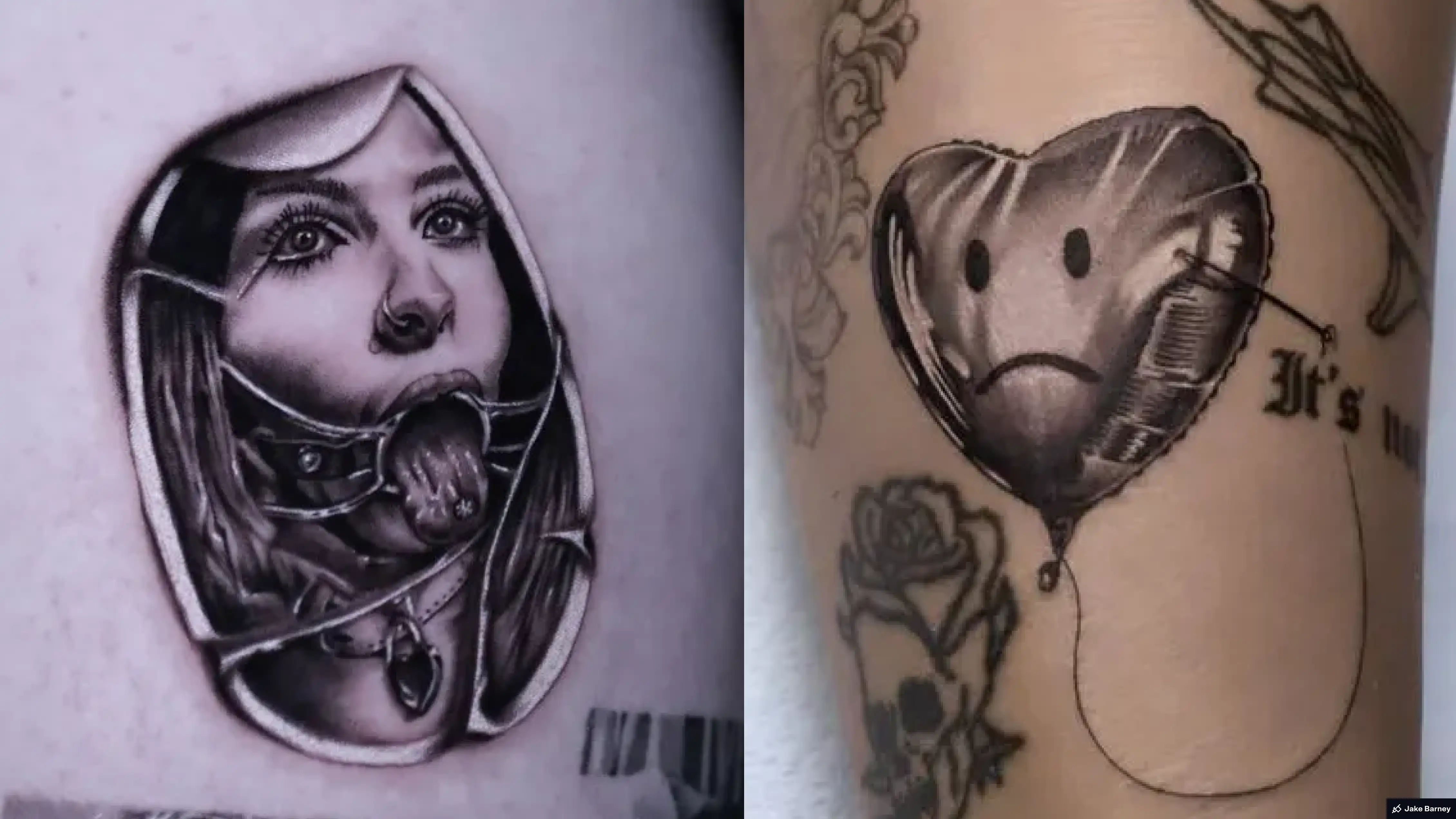
Jake Barney, tattooing as @jakebarneyfromstatefarm, is known for folded paper and hyperreal sticker work in black and grey, out of Rose Ink Studio in Egg Harbor Township, New Jersey. Their micro-realism and fine line technique is what makes the surface texture convincing.
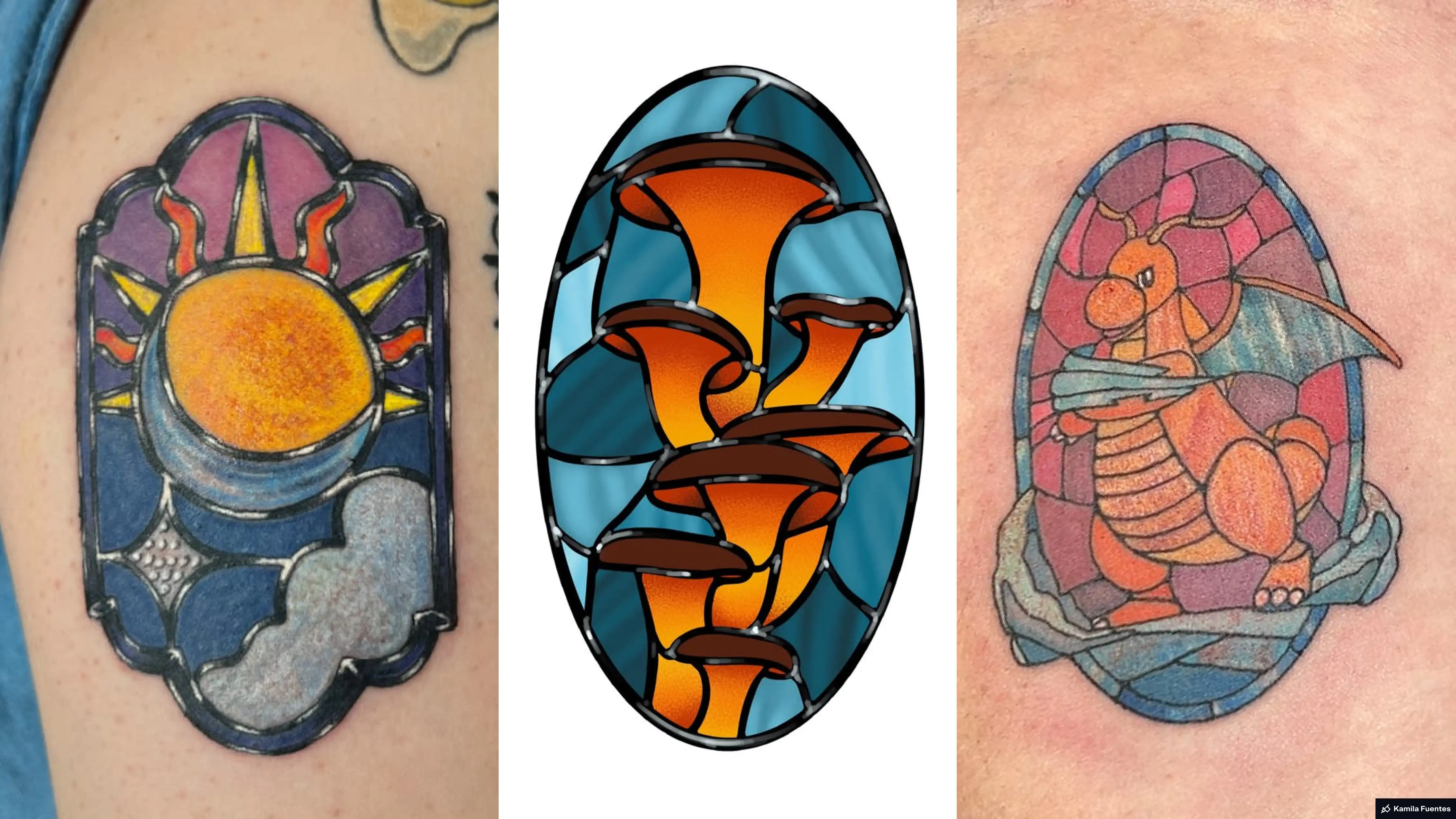
Kamila Fuentes, tattooing as @ink.jinx, brings formal fine arts training to stained glass and illustrated made-real work, booking out of She Shed Collective in Salt Lake City, Utah. Their style draws from Illustrative, Neo Traditional, and Sticker work.
Why it starts as a conversation
None of this comes off a flash sheet. A peeled sticker with a cast shadow placed exactly on the right body part, in the right skin tone, at the right scale, that starts as a conversation about what the piece has to do. Which means the Artists who do this work need a profile that shows Clients exactly what they're capable of. The work has to speak before the conversation starts.
Where Clients find the real thing
Clients searching for this work are looking for proof. A portfolio that shows the shadow, the surface, the illusion working on real skin. On CO:CREATE, they find Artists by style, and they see real work, not a render. Real Wanna Do Designs, real booking history, real Artist profiles.
If you're building this kind of work, your profile is what gets you found.

Made with tattoo Artists, for tattoo Artists. Run your business your way. Clients find you and book you, no middleman.


Made with tattoo Artists, for tattoo Artists. Run your business your way. Clients find you and book you, no middleman.